Midterm Exam:
- Use a Pencil.
- If you change an answer, erase your old answer completely.
- When you are finished, turn in your exam and remain silent until 10:45.
Warm-up:
Look at the X Y grid target on the board. Comment on the X accuracy, X precision, Y Accuracy, and Y precision
Today:
- Notes option for test. Come to the test with a number two pencil.
- How to adjust the spreadsheet graph dimensions so that the scales are proportional.
- Enter data into launcher analysis spreadsheet in Stapleton Read Only folder, on M drive. Enter your group members' names into the name cell on the spreadsheet. Save the file with your name in the filename. Printed launcher analysis spreadsheet must be shown to Mr. Stapleton before the end of class today. Keep it until you have finished improving your launcher.
- Improve your launcher
Homework:
Study for midterm
Absent Students:
Complete the warm-up
Warm-up, Part I
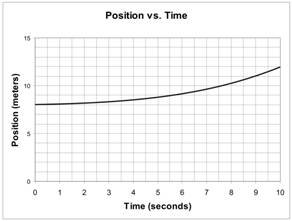
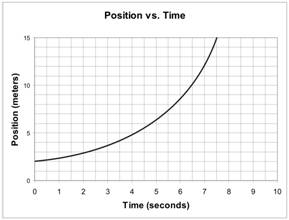
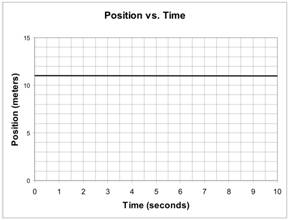
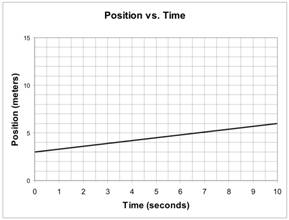
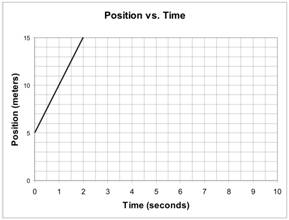
The graphs below show position vs time...
1. Which axis tells you the position in meters?
2. Which axis tells you the time in seconds?
3. Which graph shows zero velocity?
4. Which graph shows the highest constant velocity?
5. Which graph shows the fastest acceleration?
Warm-up, Part II
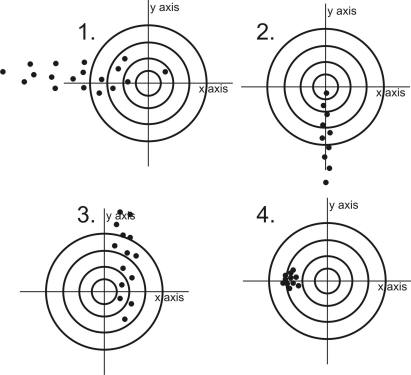 1. Judge the
catapult shooting represented on each of the targets
to the right. Enter "good" or "bad."
1. Judge the
catapult shooting represented on each of the targets
to the right. Enter "good" or "bad."
| Target | X Precision | Y Precision | X Accuracy | Y accuracy |
| 1 | ||||
| 2 | ||||
| 3 | ||||
| 4 |
2. Suggest a probable cause and a possible solution for each type of mistake represented on the targets.
Today:
- Warning about steel balls and glass (windows)
- Check for completed Unit 1 Exam Reviews. PDF of answers Have you studied?
- Collect data for Launcher Precision and Accuracy Analysis -- sign out a steell ball as needed
- Enter data into launcher analysis spreadsheet in Stapleton Read Only folder, on M drive. Enter your group members' names into the name cell on the spreadsheet. Save the file with your name in the filename. Print your spreadsheet and show it to Mr. Stapleton before the end of next class (1/13). Keep it until you have finished improving your launcher.
Homework:
Study for midterm
Absent Students:
Complete the warm-up
Warm-Up:
"Accuracy" tells how close you are to your target.
"Precision" tells how consistent you are.
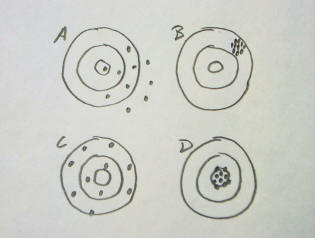 Four
shooters fired ten shots at a target on the right. Each fired at a
different target. Which shooter was...
Four
shooters fired ten shots at a target on the right. Each fired at a
different target. Which shooter was...
- Precise, but not accurate
- Accurate, but not precise
- Precise and accurate
- Neither precise nor accurate
Today:
- Get exam study guide (see below for download)
- Finish catapults
- Measure accuracy and precision at 2.5meters. Complete this spreadsheet to analyze your data. Save your file with your name in the file name.
Midterm Online Exam Review:
Exam will be divided into two parts...
Part I: Motion
- Unit 1 test; PDF of answers; video of me going over the test
- Unit 1 Review. PDF of Review answers Watch these videos of us going over the review. Part IV includes a few extra problems. Videos: Part I, Part II, Part III, Part IV
Part II: Newton's Laws [Anyone who scored 90% {46.5}or better on the Newton's Laws test is exempt from this part of the midterm.]
- Newton's Laws Test review. PDF of answers Links to slightly blurry (but still helpful)YouTube videos of test review: Part I (p.1-2) -- starts out small and gets bigger, Part II (p. 3-4), Part III (Last problems on p. 4) Schooltube Video Links: part I, part II, part III
Homework:
Study for midterm
Absent Students:
Complete the warm-up
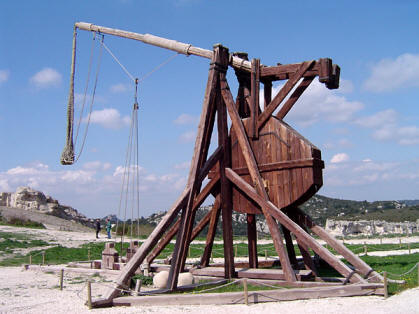
Warm-Up: Which of these is a catapult, and which is a trebuchet?

Today:
- Build catapults. Use Mr. Stapleton's design, or make your own. Catapults should be complete or close to completion by the end of class. Do not waste time.
Tentative schedule.
| Thursday, 1/5 | Monday, 1/9 | Wednesday, 1/11 | Friday, 1/13 |
|
|
|
|
| Exam | Monday, 1/23 | Wednesday, 1/25 | Friday, 1/27 |
|
|
|
|
Homework:
Turn in a print-out of your car analysis by next Monday (1/9/2012). You will need to do this on a school computer -- one per group. Find your car's acceleration distance, acceleration time, maximum velocity, acceleration, net force, and output power (in watts and horsepower). Find the new 2012 car graph file in Mr. Stapleton's read only folder. Save it to your folder with your name in the file. Find your fastest video and your car's photograph in the read-only folder, and use the video and the mass from your photograph to complete the spreadsheet. Print the spreadsheet and turn it in.
Absent Students:
Warm-Up:
How do good marksmen (markspeople?) shoot accurately?
Today:
- Reminder: how to complete the homework
- Absent students: take tests
- Return tests; then give back to Mr. Stapleton
- End of Semester Project: Projectile Launchers
- Projectile Launcher Activity: graphing distance versus angle; hitting targets; developing a launch procedure for maximum precision; shooting contest at undisclosed distance
Homework:
Turn in a print-out of your car analysis by next Monday (1/9/2012). You will need to do this on a school computer -- one per group. Find your car's acceleration distance, acceleration time, maximum velocity, acceleration, net force, and output power (in watts and horsepower). Find the new 2012 car graph file in Mr. Stapleton's read only folder. Save it to your folder with your name in the file. Find your fastest video and your car's photograph in the read-only folder, and use the video and the mass from your photograph to complete the spreadsheet. Print the spreadsheet and turn it in.
Absent Students:
Warm-Up: none -- computer was down
Today:
- Take test
- Complete your car analysis. Find your car's acceleration distance, acceleration time, maximum velocity, acceleration, net force, and output power (in watts and horsepower). Find the new 2012 car graph file in Mr. Stapleton's read only folder. Save it to your folder with your name in the file. Find your fastest video and your car's photograph in the read-only folder, and use the video and the mass from your photograph to complete the spreadsheet. Print the spreadsheet and turn it in.
Homework: None, unless you want to finish your car analysis. If you don't, you will have to complete it after break.
Absent Students:
- Schedule a time to take the test
- Complete your car analysis. See above.
Warm-Up:
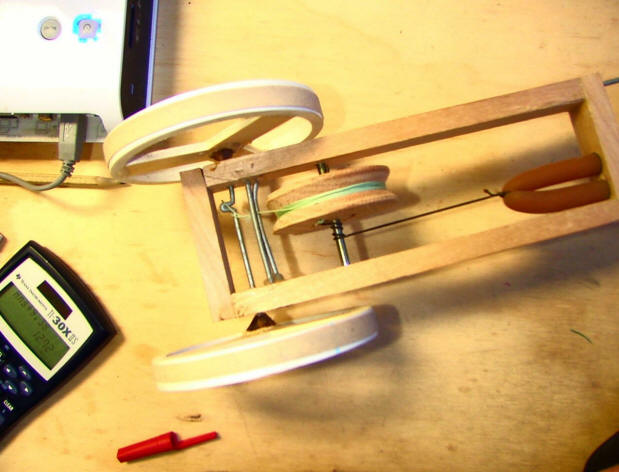
How does this car work?
Today:
- Check homework: test review
- Go over answers to test review. PDF of answers Links to slightly blurry (but still helpful)YouTube videos of test review: Part I (p.1-2) -- starts out small and gets bigger, Part II (p. 3-4), Part III (Last problems on p. 4) Schooltube Video Links: part I, part II, part III
- Complete your car analysis. Find your car's acceleration distance, acceleration time, maximum velocity, acceleration, net force, and output power (in watts and horsepower).
- Create a "cheat sheet." Cheat sheet option: write or type anything you want on one side of an 8.5" x 11" sheet of paper. You may use it on the test, but if you do, your grade will be capped at 80%. You must create the sheet yourself; you may not copy someone else's.
Homework: Study for the test!!!
Absent Students:
- Complete the warm-up
- Turn in your test review
- Study for the test
Warm-Up:
A 2kg car accelerates from a standing start. It travels 9m in 3s. Use the formula below to find its acceleration. Then find its net force.
a = 2d/t2
Today:
- Return Quizzes
- Measure cars: mass in g and kg; maximum rubber band force.
- Label cars with your names. Write them near the back. Put the name of your Block (e.g. W1, W2, or W3) on the front of your car.
- Have your car photographed.
- Race and video cars.
- Work on Unit 2 test review
Homework: Test review
Upcoming Schedule
- Monday (12/19): check/discuss test review; complete car video analysis.
- Wednesday (12/21): Unit test (Newton's Laws)
Absent Students:
- Complete the warm-up
- Complete test review by next class.
Warm-Up:
A car's motor applies a force of 2N over a distance of 10m during a time of 4 seconds.
Work = Force x distance. The units we use are joules (j).
1. How much work is done by the car above?
Power = Work / time. The units we use are watts (w)
2. How much power does the car's motor produce?
Power can also measured in horsepower. Watts x 0.0013 = horsepower
3. How much horsepower does the car's motor generate?
Today:
- Check/Review Homework (Newton Car Questions #15-19) Here are the answers
- Quiz retake
- Prepare for final road test next class.
Upcoming Schedule
- Thursday (12/15): Final car road test; video cars. Get Newton's Laws Unit Test review sheet and complete by Monday -- it's due on Monday.
- Monday (12/19): check/discuss test review; complete car video analysis.
- Wednesday (12/21): Unit test (Newton's Laws)
Absent Students:
- Complete the warm-up
- Prepare for next class -- see above
Warm-Up:
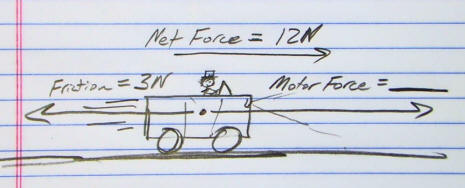
The car below is accelerating to the right. What is the force provided by its motor?
Today:
- Return Quiz. Go over it.
- As a class, complete "Newton Car" Activity questions #7-14 and 16. Here's a video from class.
- Time to work on cars and/or complete homework.
Homework:
- If your score was less than 10/12 on the quiz, you must retake the quiz on Tuesday. Study! Watch the videos from two classes ago, and do the problems over and over. Here's a blank copy of the practice problems.
- Complete the rest of the Newton Car questions (#15-19)
- Final Car Road Test next Thursday.
Absent Students:
- Complete the warm-up
- Watch the Newton Car video, above, and complete questions 7-14 and 16.
- Study for the quiz retake
Warm-Up:
You're standing in the middle of a completely frictionless frozen lake. There is no air around you, and you are beginning to suffocate. You see an oxygen tank several meters away. Right next to you are a small battery powered fan and a heavy bowling ball. What should you do in order to save your life?
Today:
- Quiz
- Complete "Newton Car" Activity -- Newton's 3rd Law. Instructions, Part I. Instructions, Part II
Homework: None
Absent Students:
- Complete the warm-up
- Watch the Newton Car Activity Instructions, above
- Schedule a time to take the quiz
Warm-Up:
- Explain what you could do in order to determine the force of friction that is acting on your rubber band car.
- Once you determine your car's force of friction, how do you determine the force of its "motor?"
Today:
- Check and review homework. Video showing how to do the homework -- fast.
- Measure your car's force of friction. Then determine its motor force. Draw two diagrams -- one showing all of the forces (including net force) acting on your car during its acceleration phase, and another showing all forces for your car's deceleration phase.
- Improve your cars. Final road test Friday or next week.
Homework:
Study for quiz next class. Quiz will be a problem like the homework that is due today. Here's a video of me going over a question like the one that will be on the quiz!
Absent Students:
- Complete the warm-up
- Watch the videos above and prepare for the quiz.
Warm-Up:

The car above has a mass of 4kg. It accelerates at a rate of 6m/s/s during the "acceleration phase." During the "deceleration phase," its acceleration is -2m/s/s.
1. What net force is acting on the car during acceleration?
2. What net force is acting on the car during deceleration?
3. What is the force of friction?
4. What is the force of the car's motor?
Today:
- Check and review homework.
- Watch videos. Use the 2012 car graph spreadsheet to create graphs of Position vs Time and Velocity vs Time. Save and Print the document.
- Use your data to find the net force acting on your car during acceleration. Show your work on a separate sheet of paper, and attach it to your printed graphs.
- Turn in your work.
- Make improvements to your car.
Homework:
Complete problems 3 and 4 from the sheet that was given out last class (see below)
Absent Students:
- Complete the warm-up and the homework (above)
Warm-Up:
The car above has a mass of 3kg. It accelerates at a rate of 2m/s/s during the "acceleration phase." During the "deceleration phase," its acceleration is -1m/s/s.
1. What net force is acting on the car during acceleration?
2. What net force is acting on the car during deceleration?
3. What is the force of friction?
4. What is the force of the car's motor?
Today:
- How to solve first homework problem. Here's a video showing how to do the homework.
- Spend 30 minutes finishing your car. Measure your car's mass.
- First "road test." Video and make observations.
- Work on homework problem. Here are step-by-step directions showing how to do the homework.
Homework:
Complete #2 on the homework sheet.
Absent Students:
- Problem 2 on the homework. See above.
Warm-Up:
A 3kg rubber band-powered car accelerates to its maximum speed, and then the rubber band releases. At this point the car starts to slow down. The car slows down over a time of 2 seconds and a distance of 8m.
1. What is its average velocity as it is slowing down?
2. What is its starting velocity (as it begins to slow down)?
3. What is its change in velocity?
4. What is its acceleration (actually, deceleration)?
5. What net force is causing the car's acceleration?
6. What is the source of this net force?
Today:
- Retake Quiz
- Finish cars. First "road test" on the Tuesday after break. You will have 30 minutes that day to finish your car.
Absent Students:
- Complete the warm-up.
- Make sure that your car is going to be finished on time (due on 11/29)
- Schedule a time to retake your quiz, if your first score was lower than 19/23.
Warm-Up:
A 2kg rubber band-powered car is sitting still. Then it accelerates over a distance of 12m. It takes the car 4 seconds to travel this distance.
1. What is its average velocity?
2. What is its final velocity?
3. What is its change in velocity?
4. What is its acceleration?
5. What net force is causing the car's acceleration?
Today:
- Return Quizzes. Here is the video of me going over the quiz.
- Measure fan cart acceleration and net forces
- Work on cars
Absent Students:
- Complete the warm-up
- Use this data to calculate a fan cart's acceleration and force: Cart mass = 0.8kg; Distance traveled during acceleration = 4m; Time to travel that distance = 6s. First, calculate its average velocity. Double that to get final velocity. To calculate acceleration, divide the change in velocity by the time. Use F=ma to calculate net force.
- Watch the video (above) and study for the quiz.
Homework: If you scored 18.5 or lower on the quiz, you must retake the quiz on Tuesday. Study!
Warm-Up:
1. There are two identical objects, A and B. Object A is pushed with more force.
- Which object will accelerate faster?
- Explain how you could prove this using a fan cart.
2. The same force pushes two objects, C and D. Object C has more mass.
- Which object will accelerate faster?
- Explain how you could prove this using a fan cart.
Today:
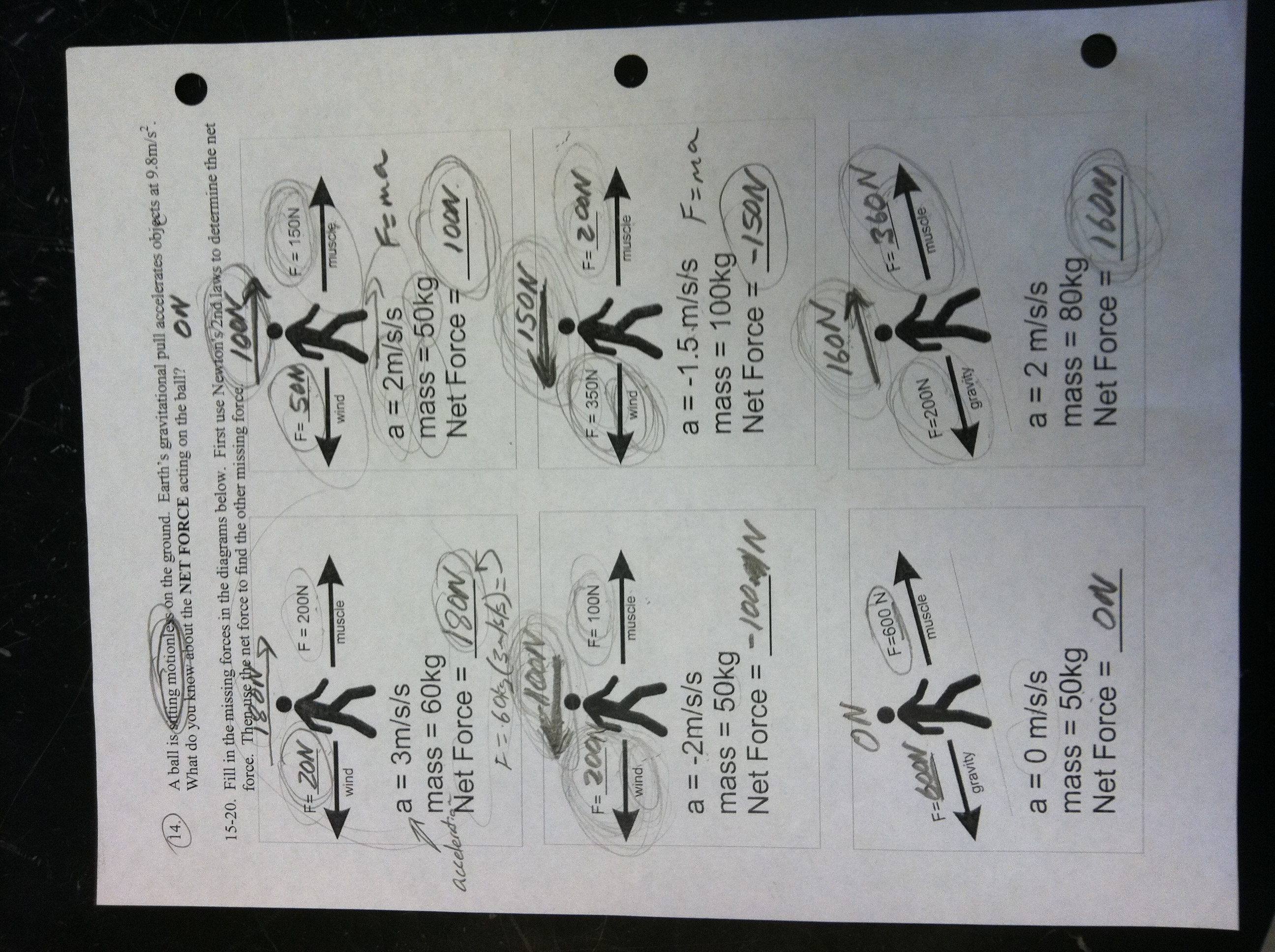
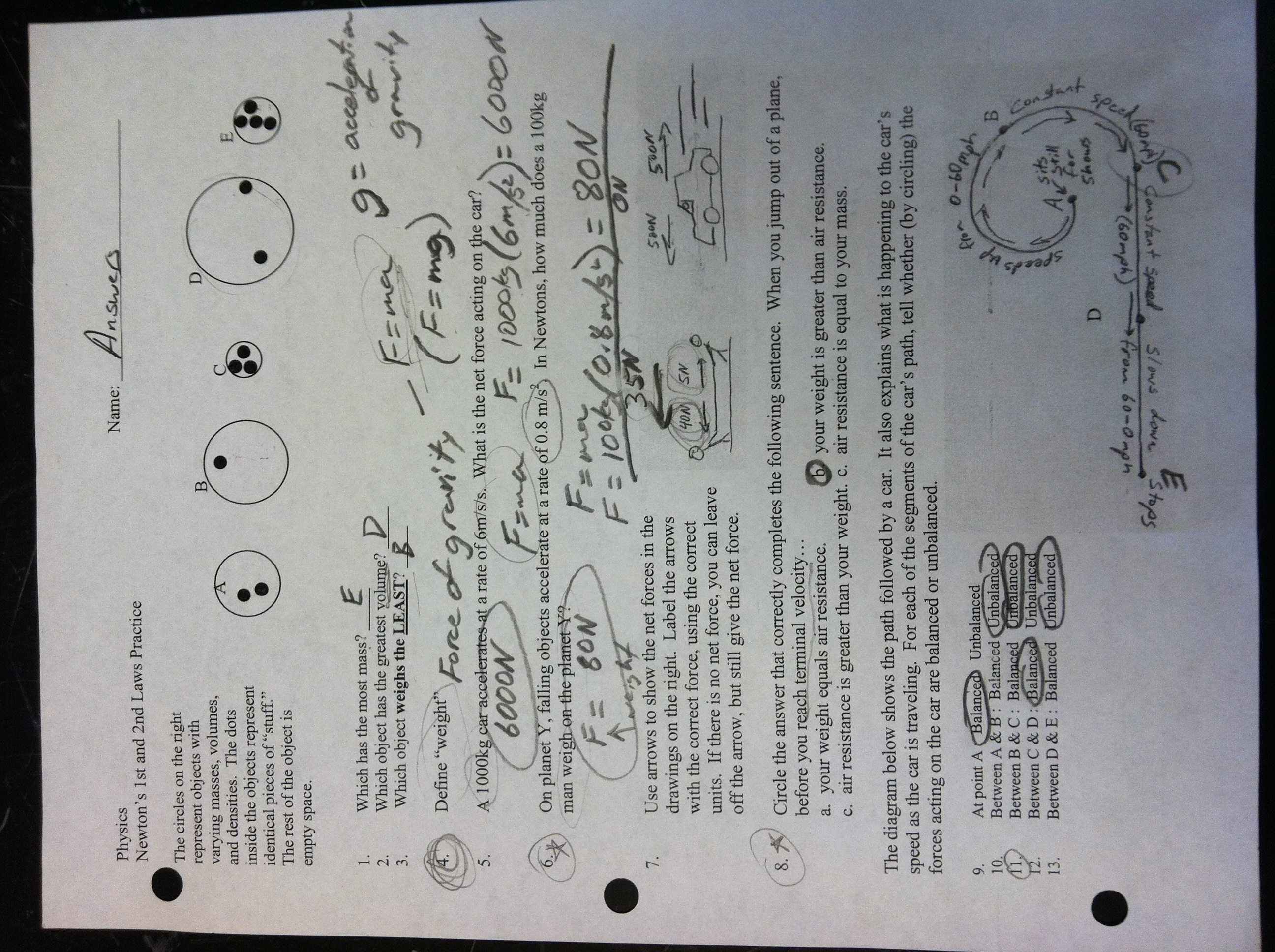
- Check and go over homework. Here are the answers: Front Back
- Quiz over 1st and 2nd Laws
- Work on cars
Absent Students:
- Complete the warm-up, above.
- Schedule a quiz retake.
Homework:
Warm-Up: Imagine that you’re a dump truck driver, and you’re driving a load of dirt to a work site. You dump the dirt and then go back to pick up some more.
A) When will you experience a smoother, less bumpy ride -- when you have a heavy load of dirt, or when your truck is light and empty?
B) Explain why.
Today:
- Newton's 2nd Law. Newton's 2nd Law Handout. Video of class-- going over 2nd Law Handout.
- Work on cars
Absent Students:
- Answer the warm-up question.
- Complete Newton's 2nd Law handout (above)
- Complete the homework below.
Homework:
- Complete Newton's 1st and 2nd law practice sheet
- Study. Quiz next class over Newton's 1st and 2nd Law handouts (from this class and last class).
Warm-Up:
- Which cars can make sharper turns -- short cars or long cars?
- What hint does this give you regarding your rubber band car design?
Today:
- Practice quiz. Grade and discuss.
- Work on cars.
Absent Students:
- Answer the warm-up question
Warm-Up:
If you hold a big rock on your head and put a board on top of the rock, you can hammer a nail into the board without hurting your head. Why don't the hammer blows hurt your head?
Today:
- Check car design drawings
- You must make two drawings
- Each drawing must be from a different perspective.
- Each drawing must fill most of 1/2 of a normal sheet of paper.
- Each part must be labeled with the materials you plan to use to create that part.
- Newton's 1st Law, balanced and unbalanced forces. Here's the Newton's 1st Law handout. Here's the video.
- Choose groups wisely. Work on cars
Absent Students:
- Answer the warm-up question
- Watch this video.and complete the Newton's 1st Law handout.