 Class
26:
Tuesday, 4/14/26
Class
26:
Tuesday, 4/14/26Warm-up:
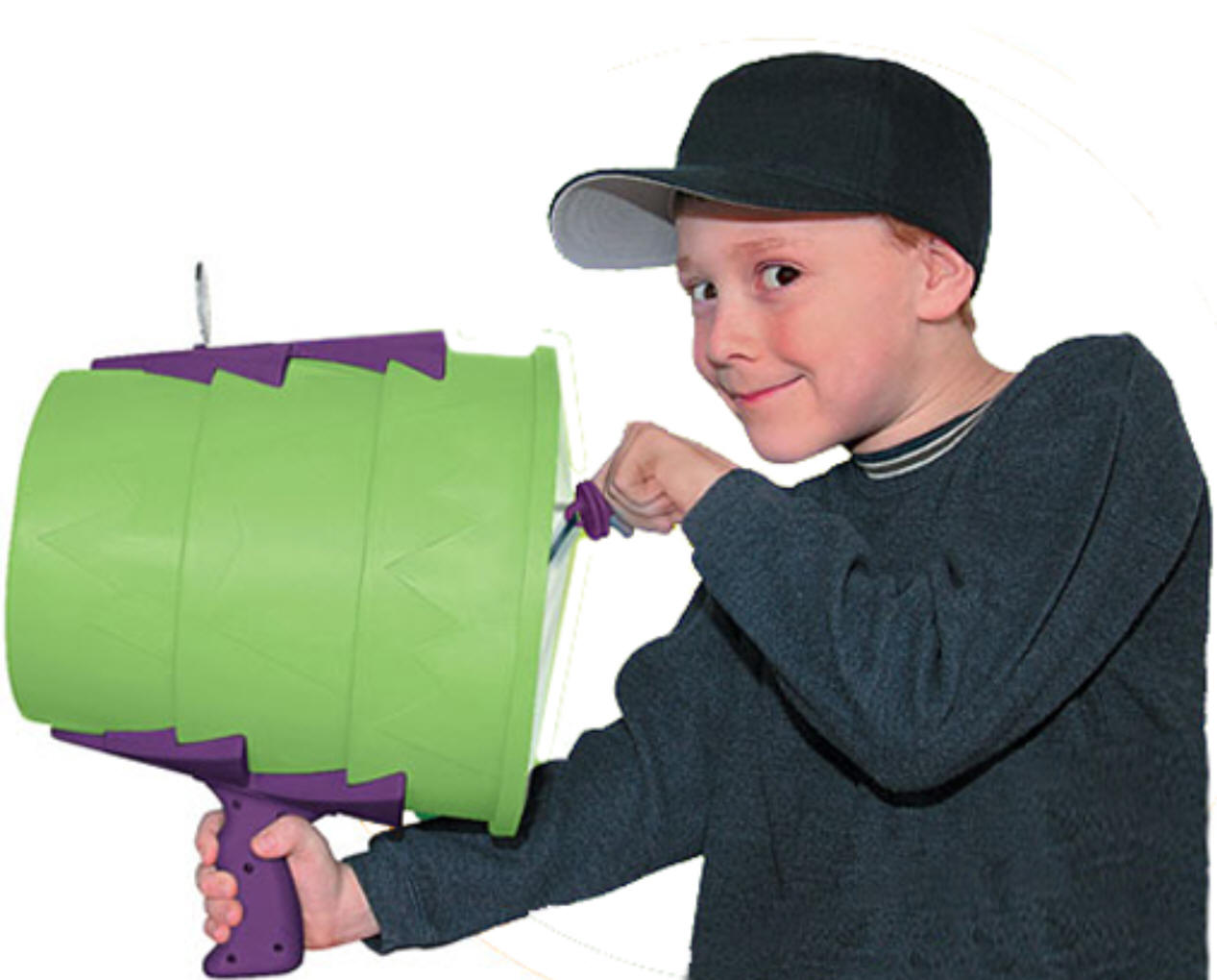
Does the Airzooka send a wave through the air? How can we tell if it's a wave?
Today:
- Finish Notes: Music Notes and Fret Spacing and (PDF)
- Make Fret Calculator Spreadsheets:
- Cut necks. I will take them home to sand.
- Make plugs -- solder plug to wire and alligator clips
- Finish pickups and test with mini-amps
Until Next Class: None
 Class
25:
Friday, 4/10/26
Class
25:
Friday, 4/10/26Warm-up:
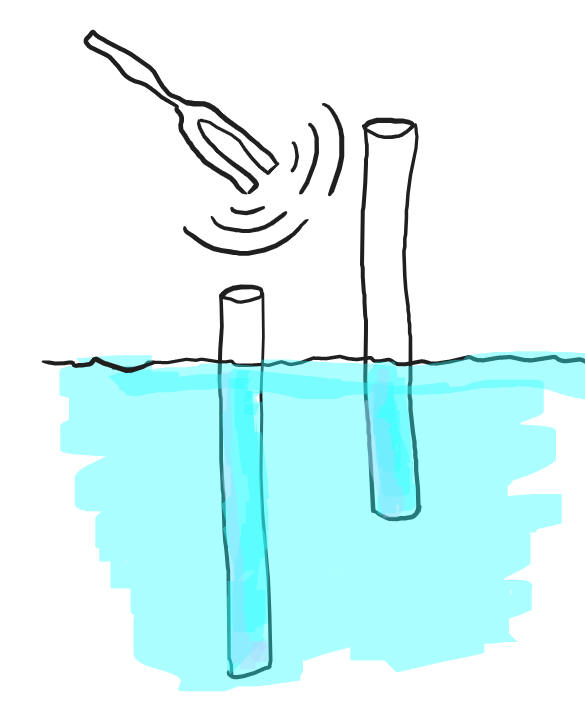
I am going to submerge an open pvc pipe in water. Then I will pull the pipe vertically out of the water, holding a ringing tuning fork next to it. At some point(s) the sound of the tuning fork will get louder and then quieter again.
1. Why will the sound get louder?
2. If we measure the pipe height at which the sound gets loud, we can calculate the speed of sound. How?
Today:
- More Notes: Music Notes and Fret Spacing and (PDF)
- Make Fret Calculator Spreadsheets:
- Decide on your scale length (saddle-to-nut) distance
- Attach "peg box" and bridge.
- Draw lines to cut neck and pickup slot -- and cut?
- Make plugs -- solder plug to wire and alligator clips
- Finish pickups and test with mini-amps
Until Next Class: None
 Class
24:
Wednesday, 4/8/26
Class
24:
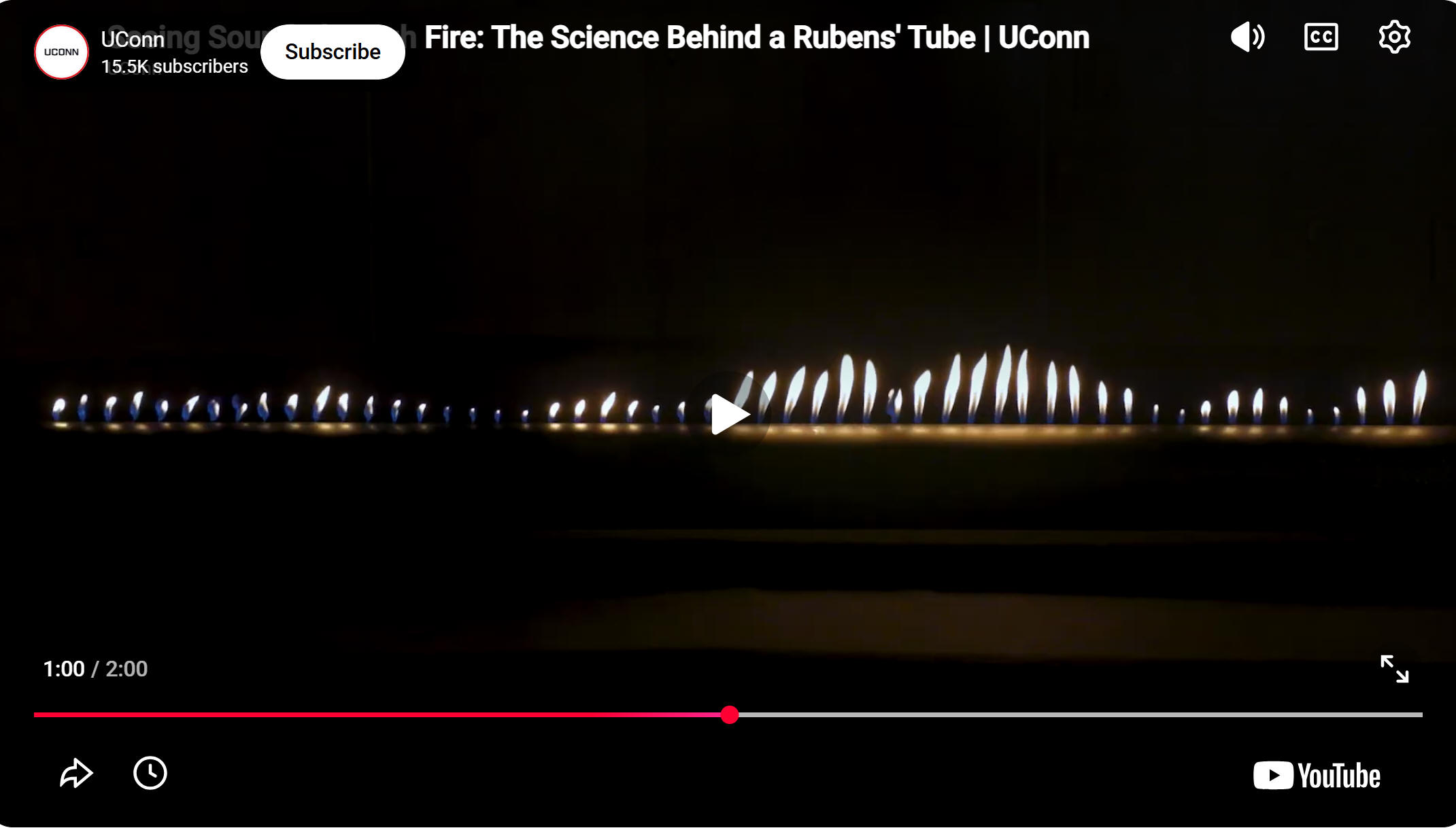
Wednesday, 4/8/26Warm-up: What is a Ruben's Tube? How does it work? What can you do with it?
Today:
- Finish Pickups
- Notes: Music Notes and Fret Spacing and (PDF)
- Make Fret Calculator Spreadsheets:
Until Next Class: None
 Class
23:
Monday, 4/6/26
Class
23:
Monday, 4/6/26Warm-up:
What evidence suggests that resonance did (or did not) cause the tacoma narrows bridge to collapse? Link 1 Link 2
Today:
- Return tests
- Make pickups
- Make Fret Calculator Spreadsheets:
Until Next Class: None
 Class
22:
Thursday, 4/2/26
Class
22:
Thursday, 4/2/26Warm-up:
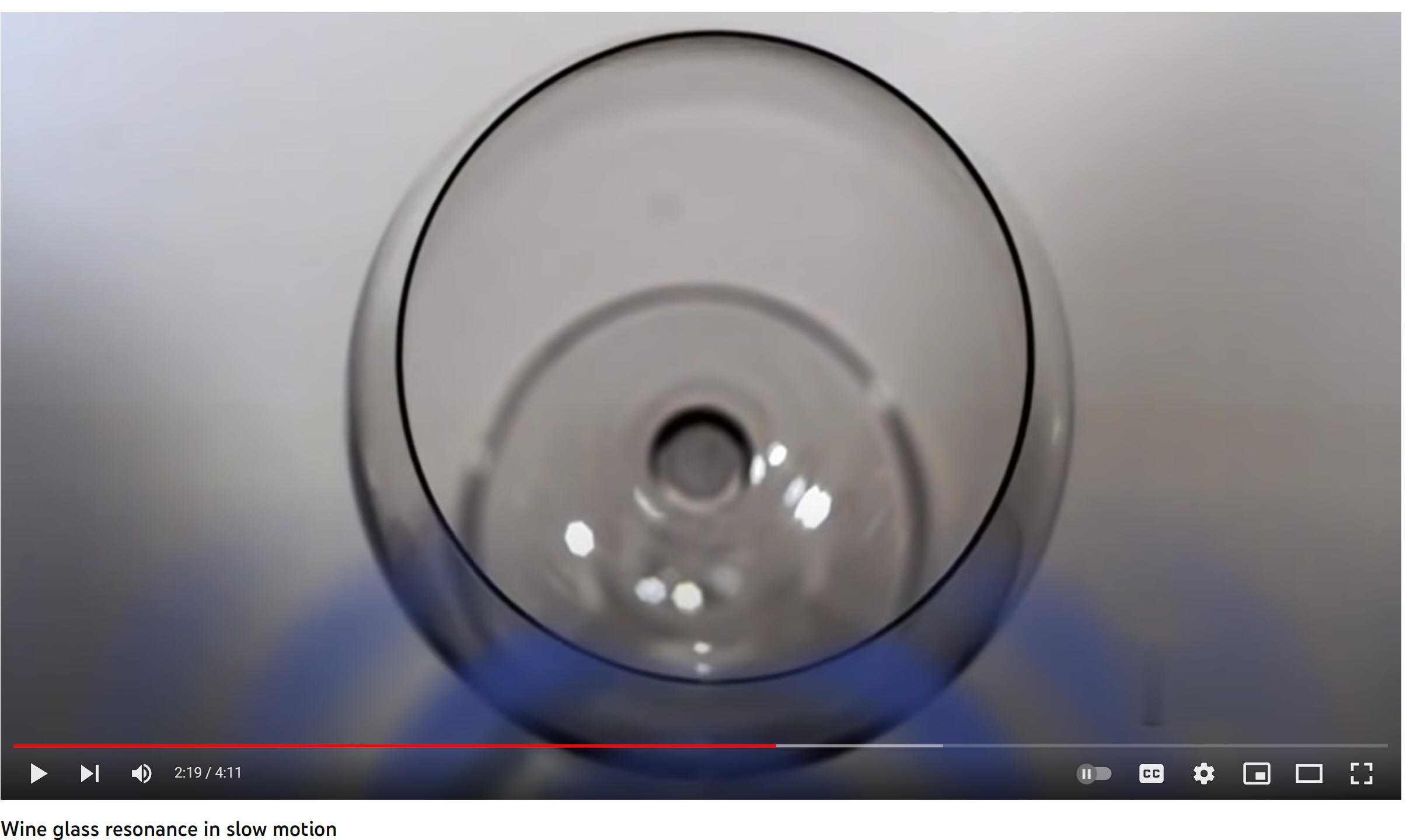
1. What do the terms resonance and forced vibration mean?
2. Which term applies to the body of a string instrument amplifying the string's sounds?
3. Which term applies to breaking glass with sound waves?
Today:
- Test
- Start making pickups
- Slightly different version that I made in 37 minutes
Until Next Class: None
Warm-up: What
is going on in this video? Why does the salt pile up in specific
locations?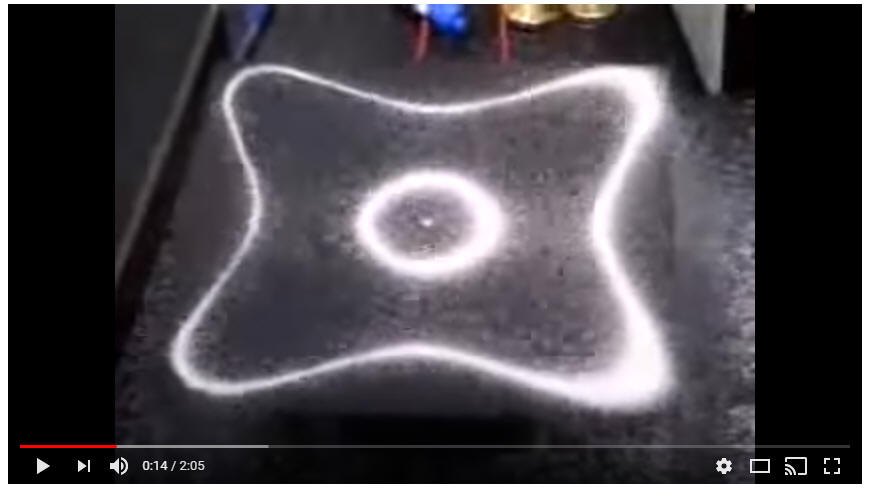
Today:
- Waves Quiz 2
- Finish the handout -- test review.
- Unit 5 Handout PDF version
- Mechanical waves links
- Resonance, breaking glass with sound, and the Tacoma Narrows Bridge Collapse ( Link 1 Link 2)?
- Prepare for test next class. Video of practice test.
Until Next Class: Prepare for test over sound and waves
 Class
20:
Friday, 3/27/26
Class
20:
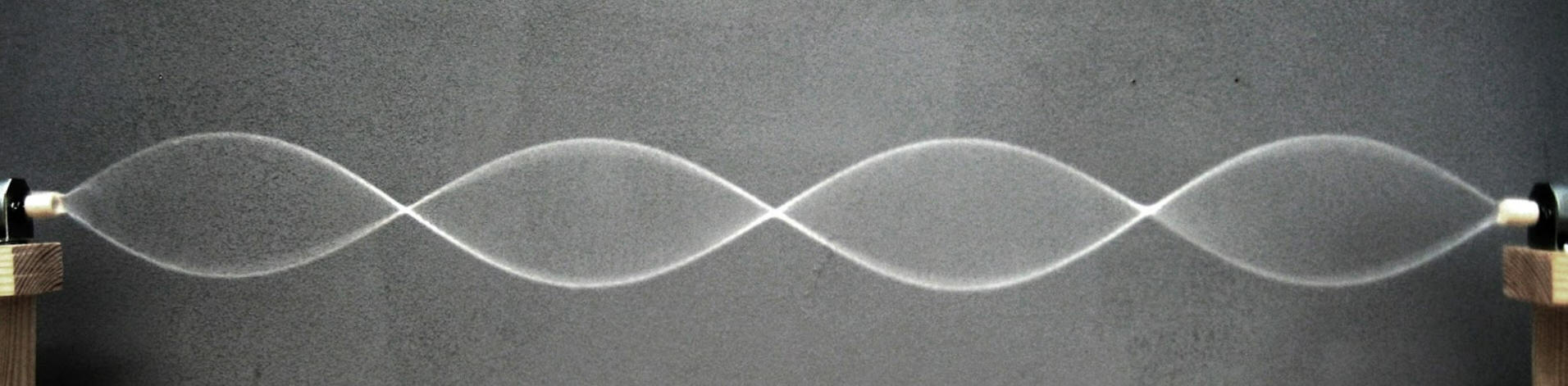
Friday, 3/27/26Warm-up: Is this a real photo of a string?
Today:
- Waves Quiz 1
- More interesting Sound and Waves stuff:
- Unit 5 Handout PDF version
- Mechanical waves links
- Beats
- Standing Waves
- Doppler Effect
- Prepare for a quiz next class. Do a practice and make a video.
Until Next Class: Quiz 2 next class
 Class
19:
Wednesday, 3/25/26
Class
19:
Wednesday, 3/25/26Warm-up:
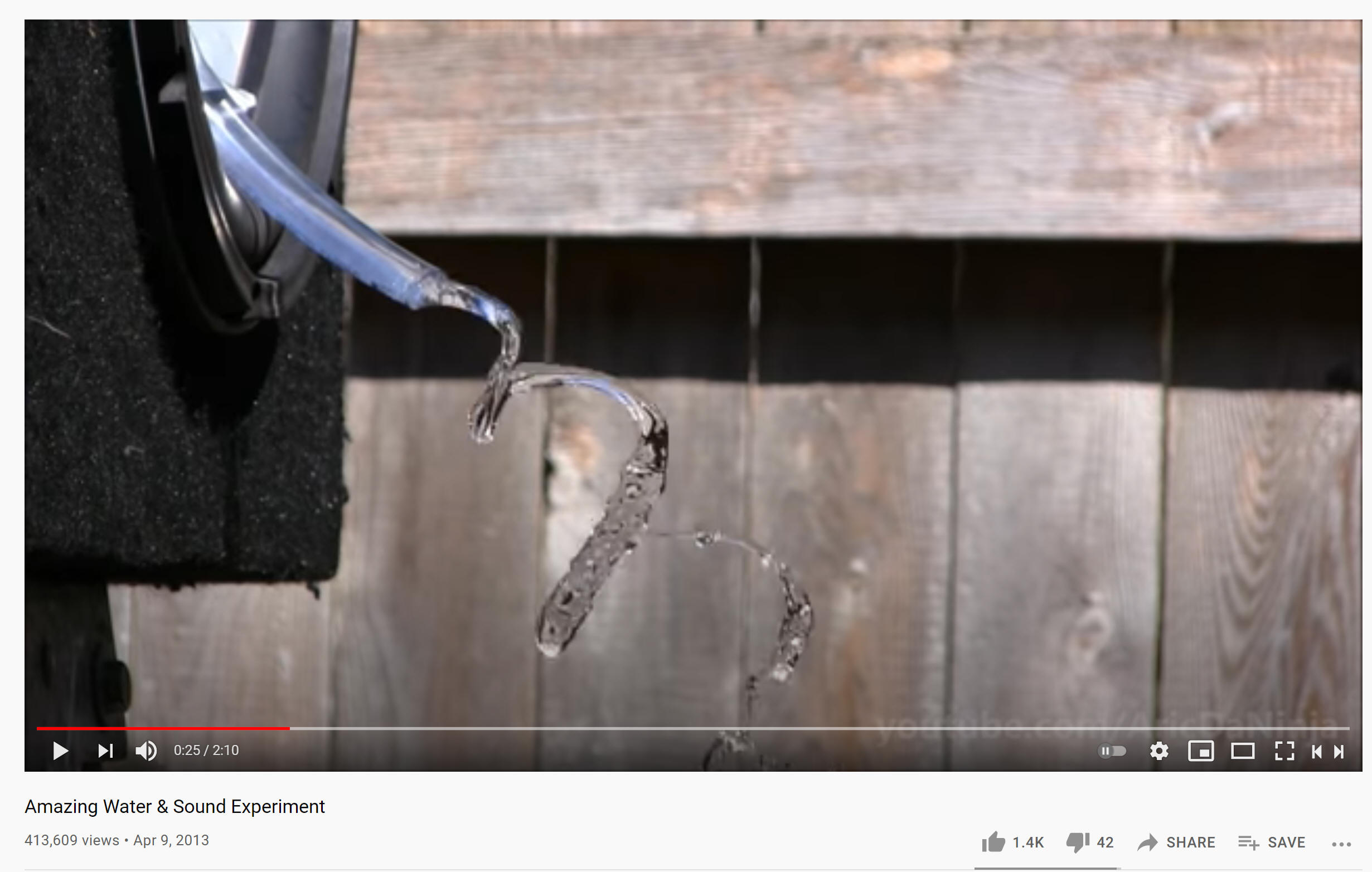
1. What's happening in the "Amazing Water and Sound Experiment?"
2. How can we reproduce this with a fan and a variable speed strobe light?
Today:
- Return Quizzes
- Sound and Waves -- Notes p.4, then practice on p. 8-9
- Prepare for a quiz next class, very similar to this one... Questions and Solutions
Until Next Class: Quiz next class
 Class
18:
Monday, 3/23/26
Class
18:
Monday, 3/23/26Warm-up:
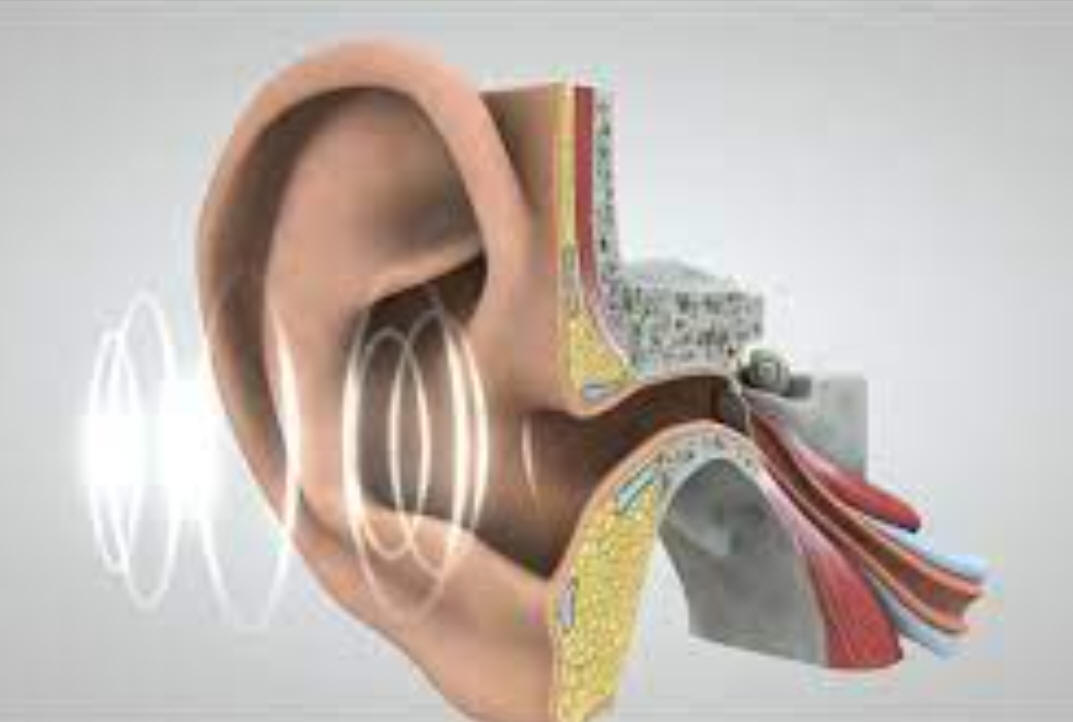
What is a wave? What is a sound? How do ears work?
Today:
- Quiz -- Electricity and Magnetism
- New Unit -- Sound and Waves VIDEO of notes
- Complete practice questions on packet p. 7-8, except for number 9 and the wavelength on number 16. Notes and answers
Until Next Class: none
 Class
17:
Tuesday, 3/17/26
Class
17:
Tuesday, 3/17/26Warm Up:
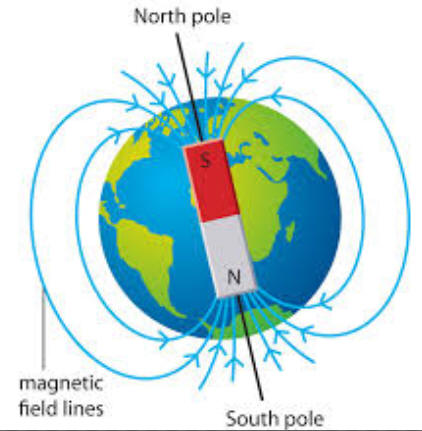
1. Is there anything wrong with the diagram on the right?
2. Why is the north pole of a magnet called the "north" pole?
Today:
- Electricity and Magnetism Notes (PDF)
- Visualizing magnetic fields with iron filings
- Relationship between motors and generators
- Copper tube demo
- Ring jump demo
- Levitation melting
- Induction Levitation Video
- Phone charging by induction
Until Next Class: Quiz next class. Do the Quizlet Google Classroom assignment.
 Class
16:
Friday, 3/13/26
Class
16:
Friday, 3/13/26Warm Up:
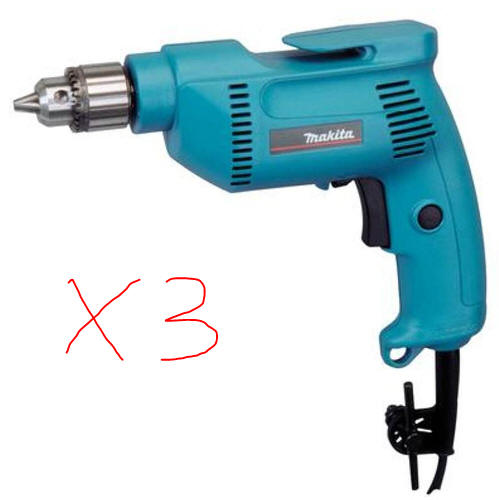
We have three identical corded drills and two drill bits. We need to drill something in a location that is farther from an outlet than the length of the cord of a drill. How can we do this without using other materials or disassembling a drill?Today:
- Wrap up the magnetism projects.
- Fix speakers -- try to drive them with the classroom receiver
- Try to turn the motor coils into generator coils -- light an LED and measure voltage??
Until Next Class: None
 Class
15:
Wednesday, 3/11/26
Class
15:
Wednesday, 3/11/26Warm Up:
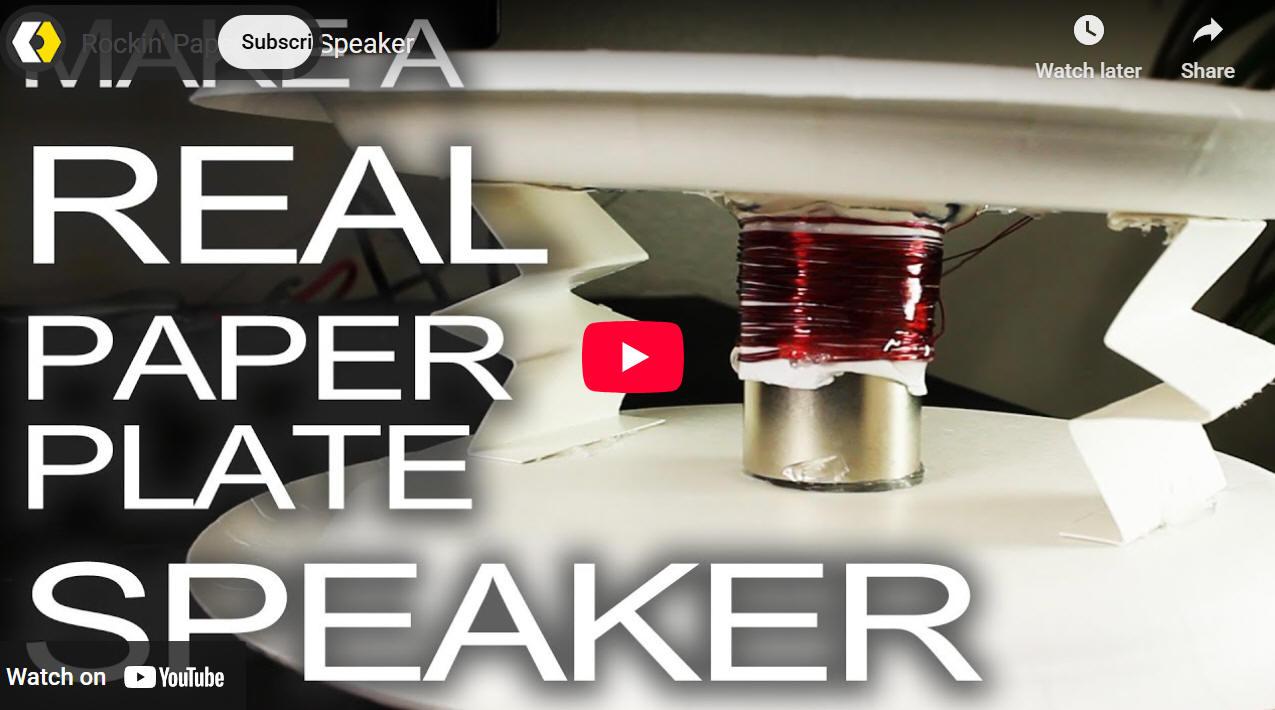
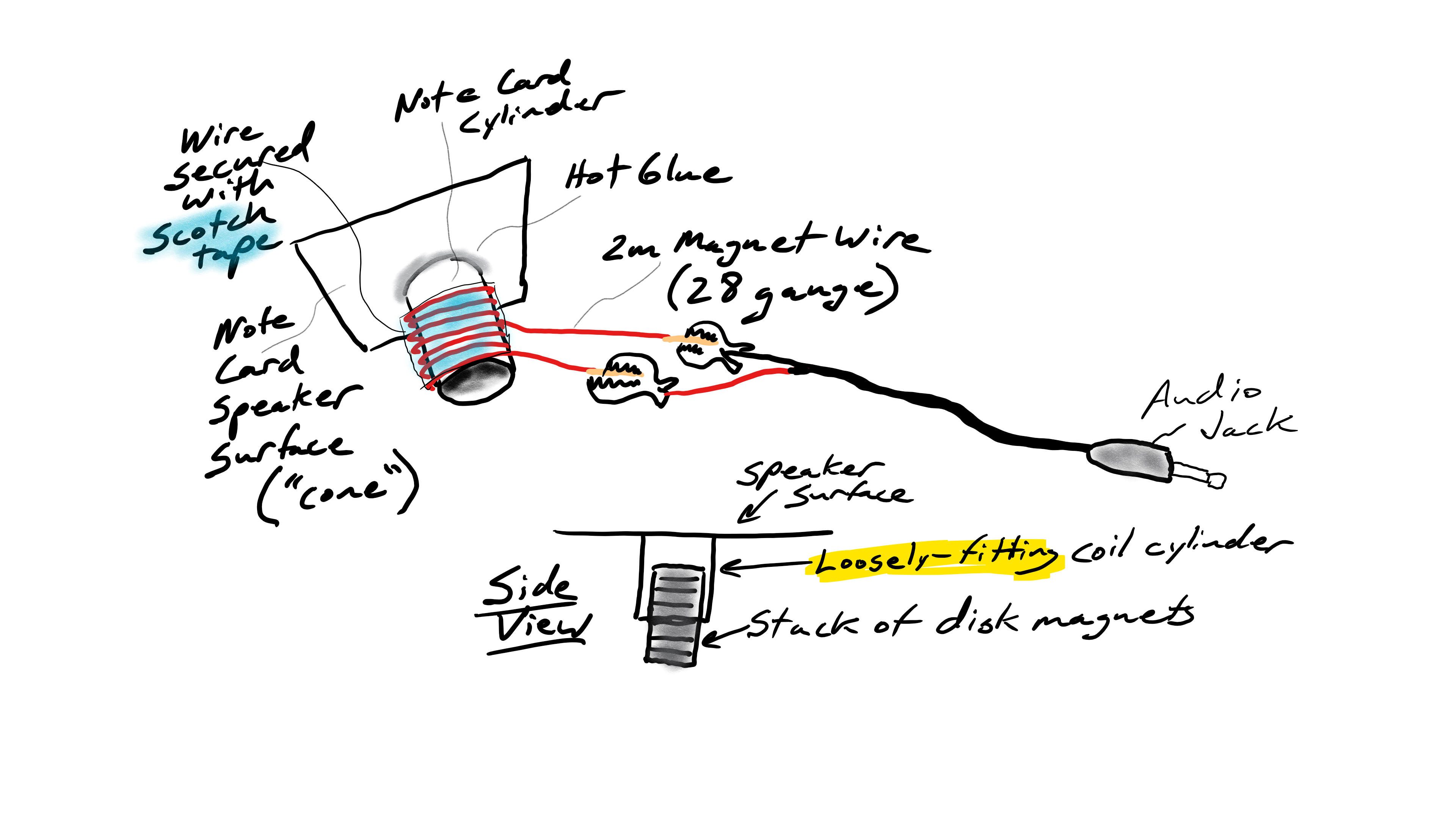
How does this speaker work?Today:
- Finish buzzer and motor assignments
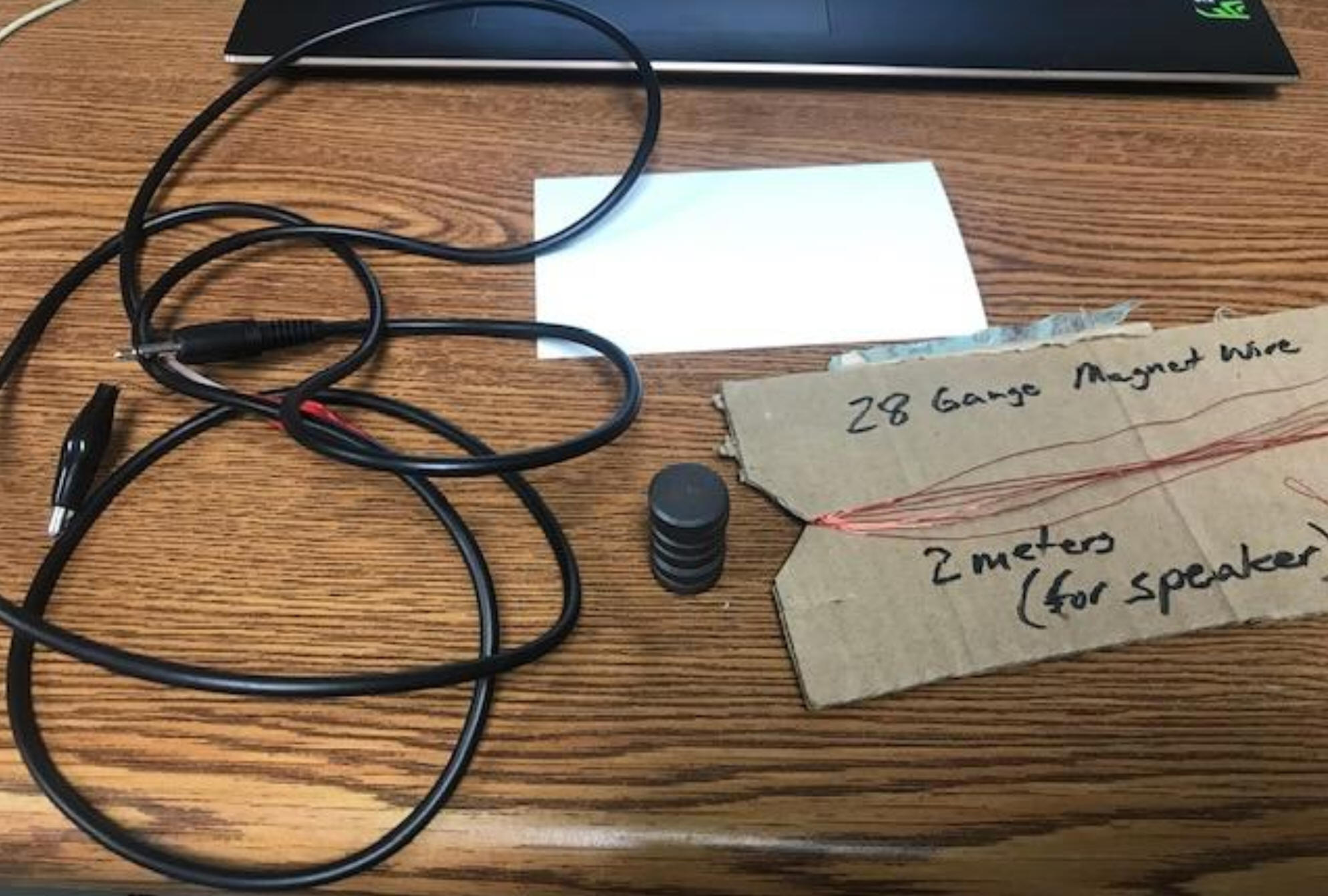
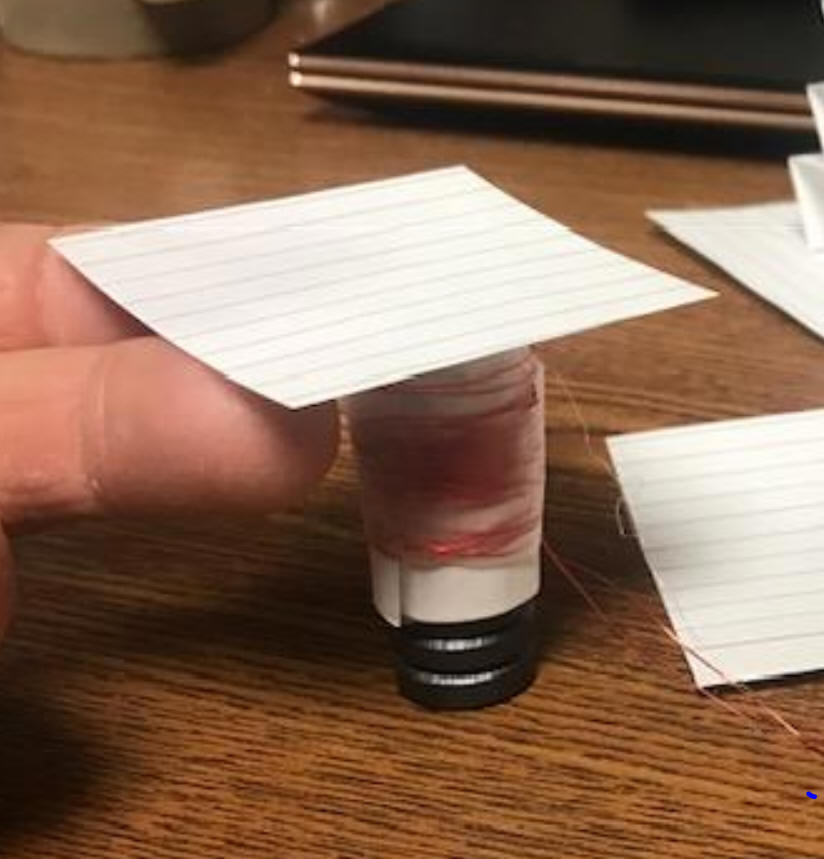
- Make a speaker using 2m
of 28gauge enameled wire, a large magnet (we will share), an audio jack with
alligator clips, and paper.
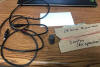 You will also need glue and/or tape. Here's what mine looked
like before I snipped off too much of the air pushing surface
("cone")
You will also need glue and/or tape. Here's what mine looked
like before I snipped off too much of the air pushing surface
("cone")
 . Here are the directions.
Until Next Class: None
 Class
14:
Monday, 3/9/26
Class
14:
Monday, 3/9/26Warm Up:
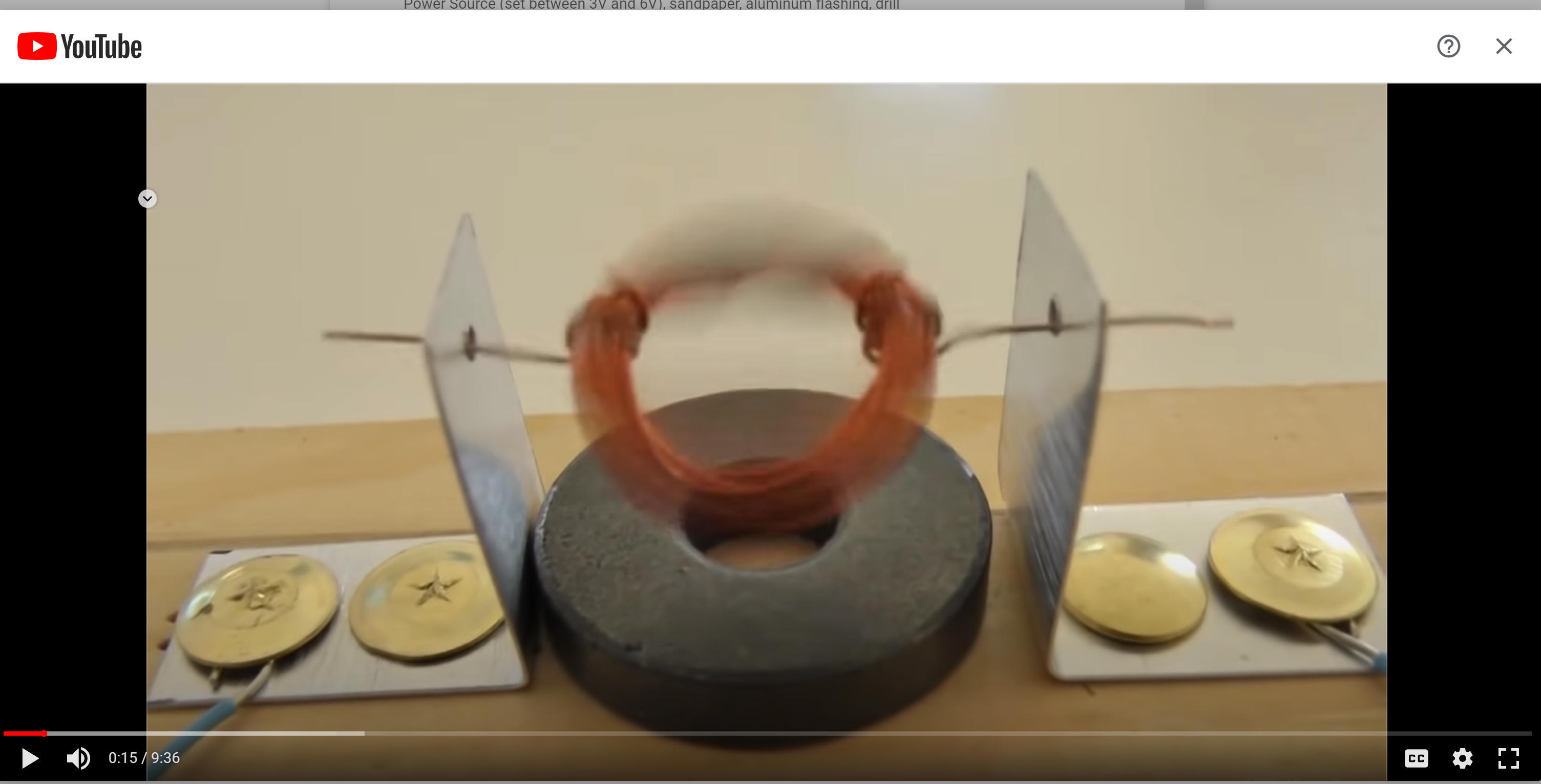
How does this electric motor work? How can it be improved?Today:
- Return/review circuit tests
- Troubleshoot the troublesome buzzer. Finish buzzer videos.
- Disassemble buzzers and return parts.
- Make a motor and a video explaining how it works -- see Google Classroom.
Until Next Class: None
 Class
13:
Thursday, 3/5/26
Class
13:
Thursday, 3/5/26Warm Up:
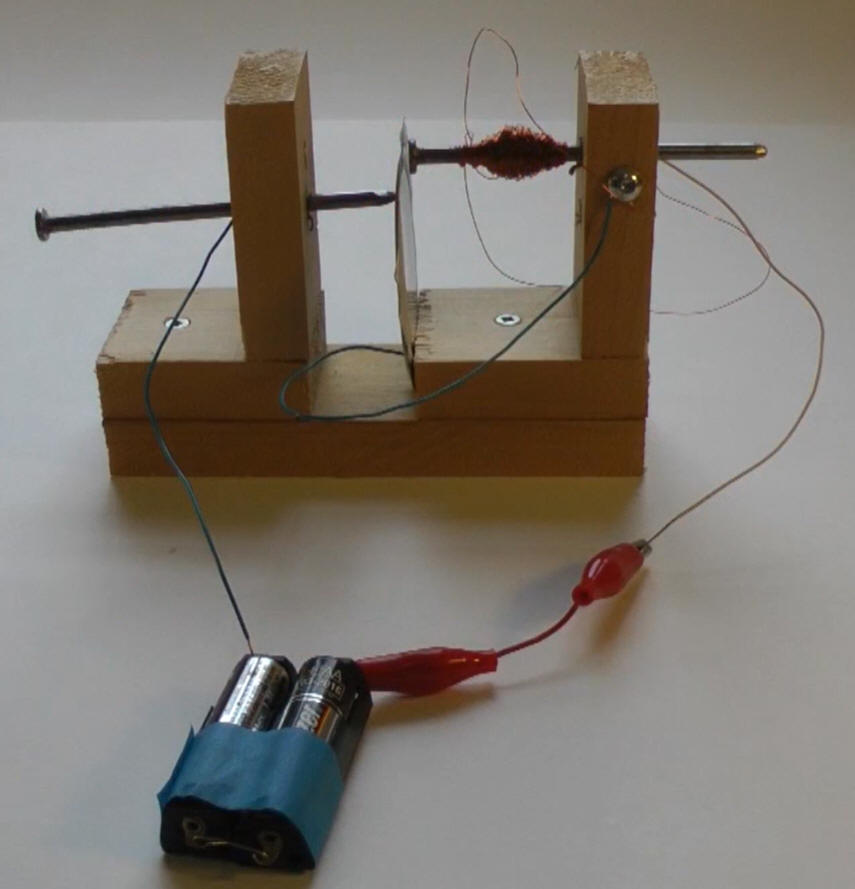
Can you guess how this buzzer buzzes?Today:
- Return/review circuit tests
- Absent students take circuit tests
- Make a solenoid buzzer: Watch this
instructional video showing how to make a
Solenoid Buzzer.
Draw a sketch of a solenoid buzzer design that uses
only the materials below:
- wood, nails, hot glue/glue guns, drill/drill bits, screws, enameled wire (10m of 28 gauge), sandpaper (and belt sander), saw (not really necessary), strips of springy magnetizable steel (approx 0.5" wide, 3" long), and a D.C. power source (set betwen 3V and 6V).
- With those materials, you will have to make a working solenoid buzzer, as shown in the video.
- Make a video. In the video, show your buzzer working and explain how it works. Everyone in your group (who wants credit) must explain part of this. See Google Classroom for details, and to turn in the the video.
Until Next Class: None
 Class
12:
Friday, 2/20/26
Class
12:
Friday, 2/20/26Warm Up:
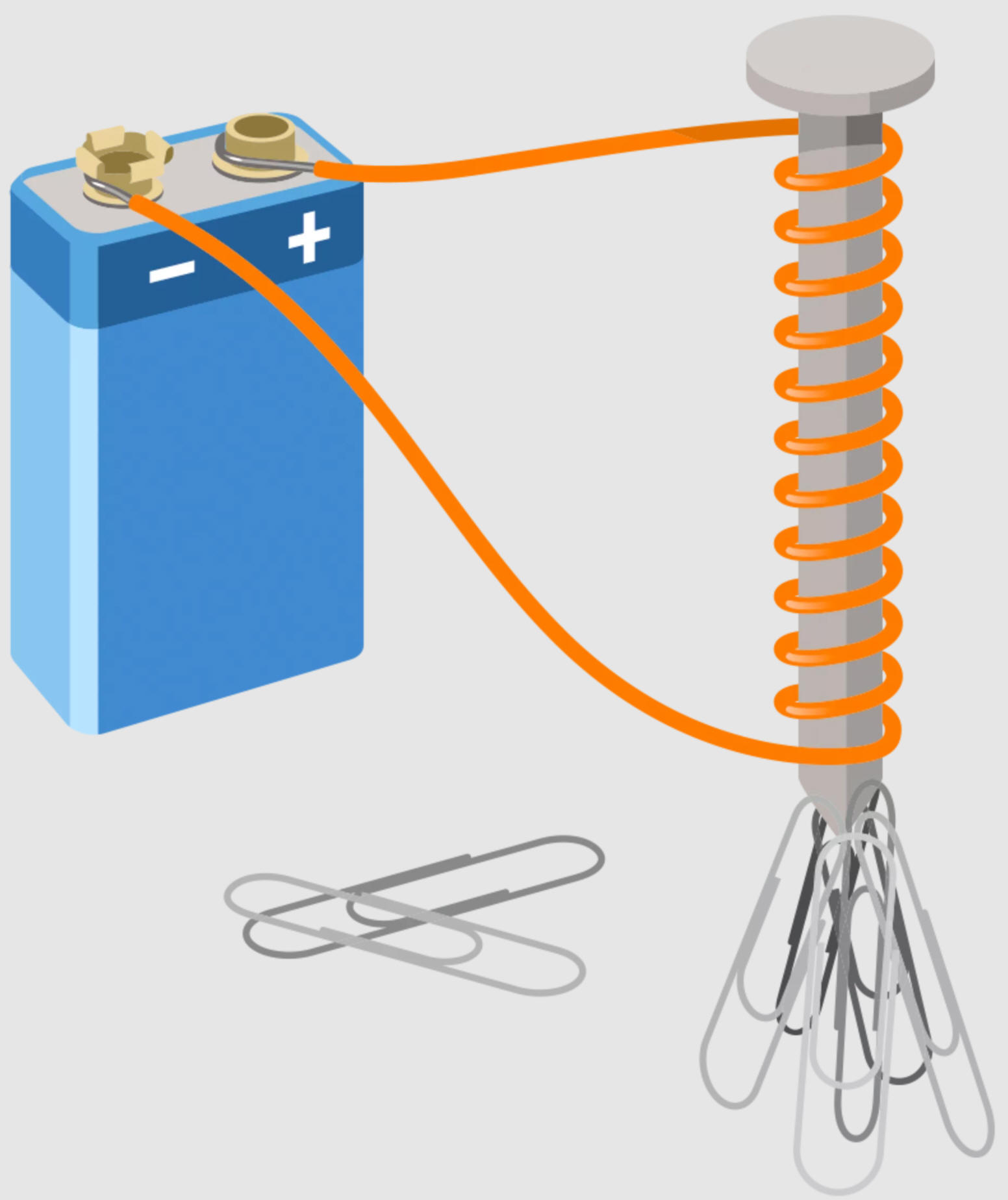
What is a solenoid? How does it work?Today:
- Quiz over Circuits
- Episode 1: Sources of Electricity (start at 4:10; stop with solar)
-
Next Activity: and test the solenoid for this
project...
- Make a solenoid buzzer: Watch this
instructional video showing how to make a
Solenoid Buzzer.
Draw a sketch of a solenoid buzzer design that uses
only the materials below:
- wood, nails, hot glue/glue guns, drill/drill bits, sheet metal screws, enameled wire (10m of 28 gauge), sandpaper (and belt sander), saw (not really necessary), strips of springy magnetizable steel (approx 0.5" wide, 3" long), and a D.C. power source (set betwen 3V and 6V).
- With those materials, you will have to make a working solenoid buzzer, as shown in the video.
- Make a solenoid buzzer: Watch this
instructional video showing how to make a
Solenoid Buzzer.
Draw a sketch of a solenoid buzzer design that uses
only the materials below:
- Or... Winter olympics physics?
Until Next Class: Have a great break!
Warm Up:
Another analogy for thinking about circuits -- Mr. Chase's Amazon Distribution Network analogy1. What's the purpose of the circuit?
2. Who gets the energy?
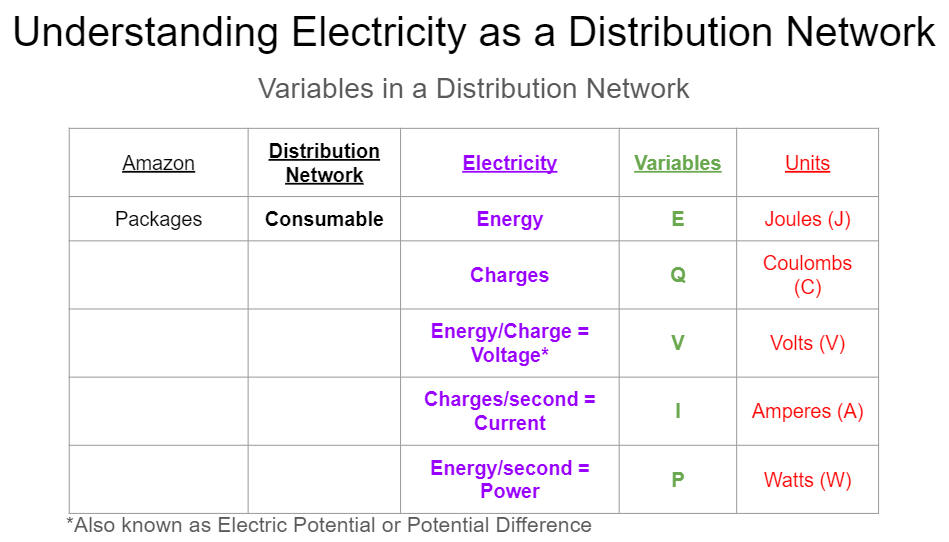

Today:
- Finish Current and Circuits, part 2 (PDF) VIDEO1 VIDEO 2
- Episode 4: Voltage, Current, and Resistance
- Practice Quiz -- Circuits (pdf)
Until Next Class: Quiz next class -- series and parallel circuit fill-in-the-blanks
Warm Up:
Let's solve these circuit puzzles.
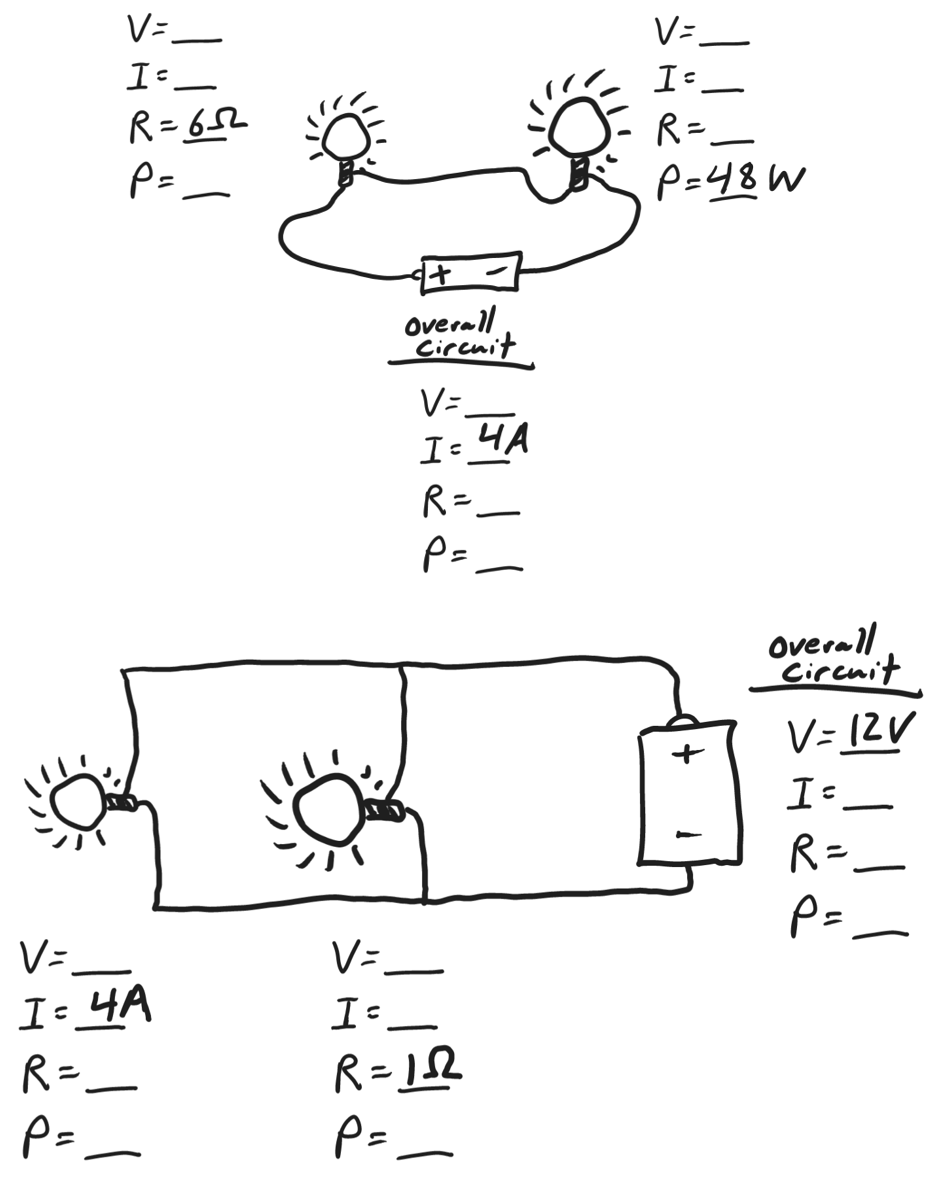
Today:
Until Next Class: Take a physics break
 Class
9:
Thursday, 2/12/26
Class
9:
Thursday, 2/12/26Warm Up:
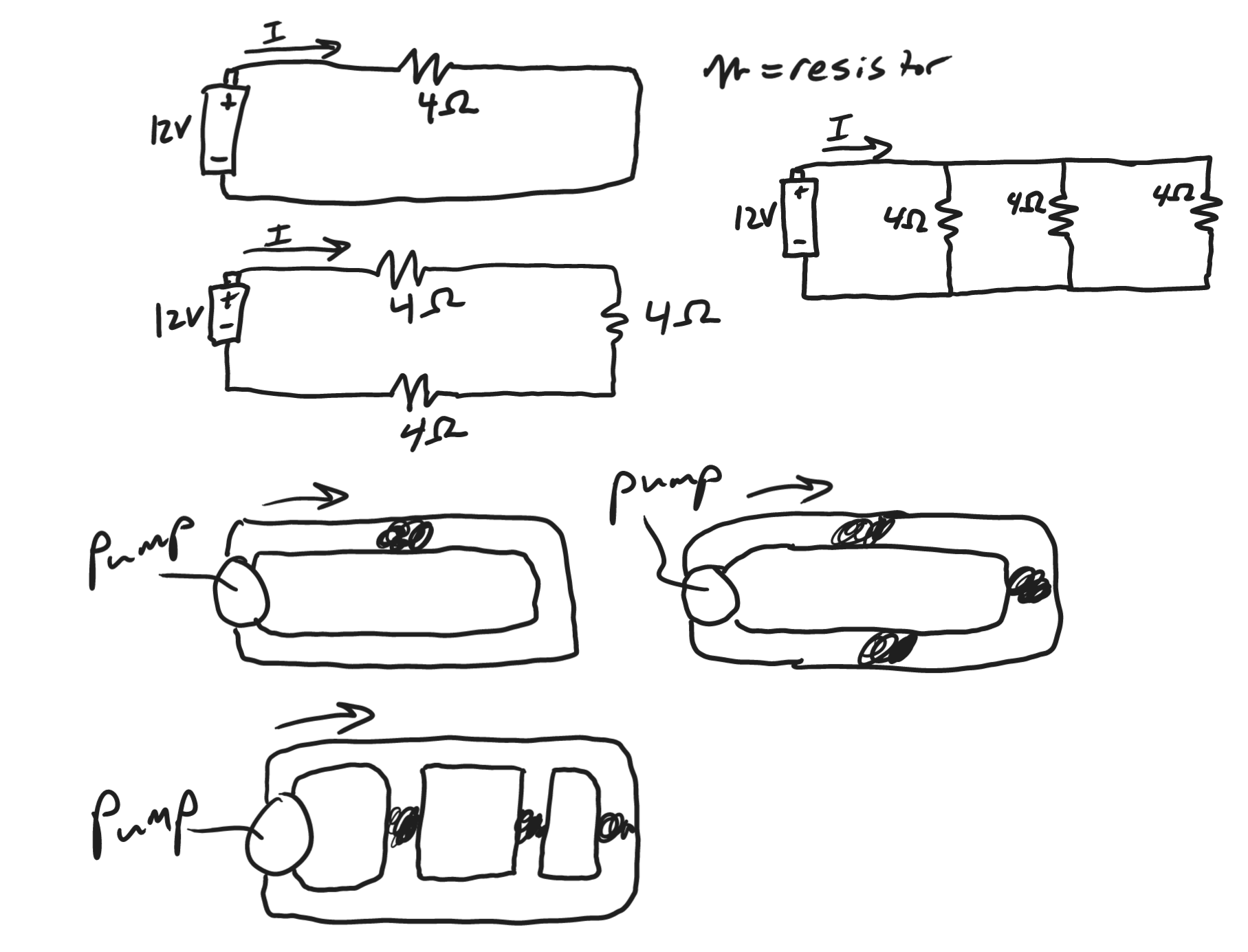
The diagram on the right shows 3 circuits and 3 versions of the circuits where we pretend that water is flowing, not electrons.1. Match Each circuit to its analog (match it to the water version of that circuit).
2. Which pumps and batteries on the right are able push out the most current?
3. Which arrangement has the least current?
4. How many amps of current flow from each battery?
Today:
- Return tests
- Finish Current and Circuits, part 2 (PDF) VIDEO1 VIDEO 2
- Electricity Video Episode 3: Electric Current,
- Next class: Circuit Lab PDF Version
Until Next Class: Have a great weekend!
 Class
8:
Tuesday, 2/10/26
Class
8:
Tuesday, 2/10/26Warm Up:
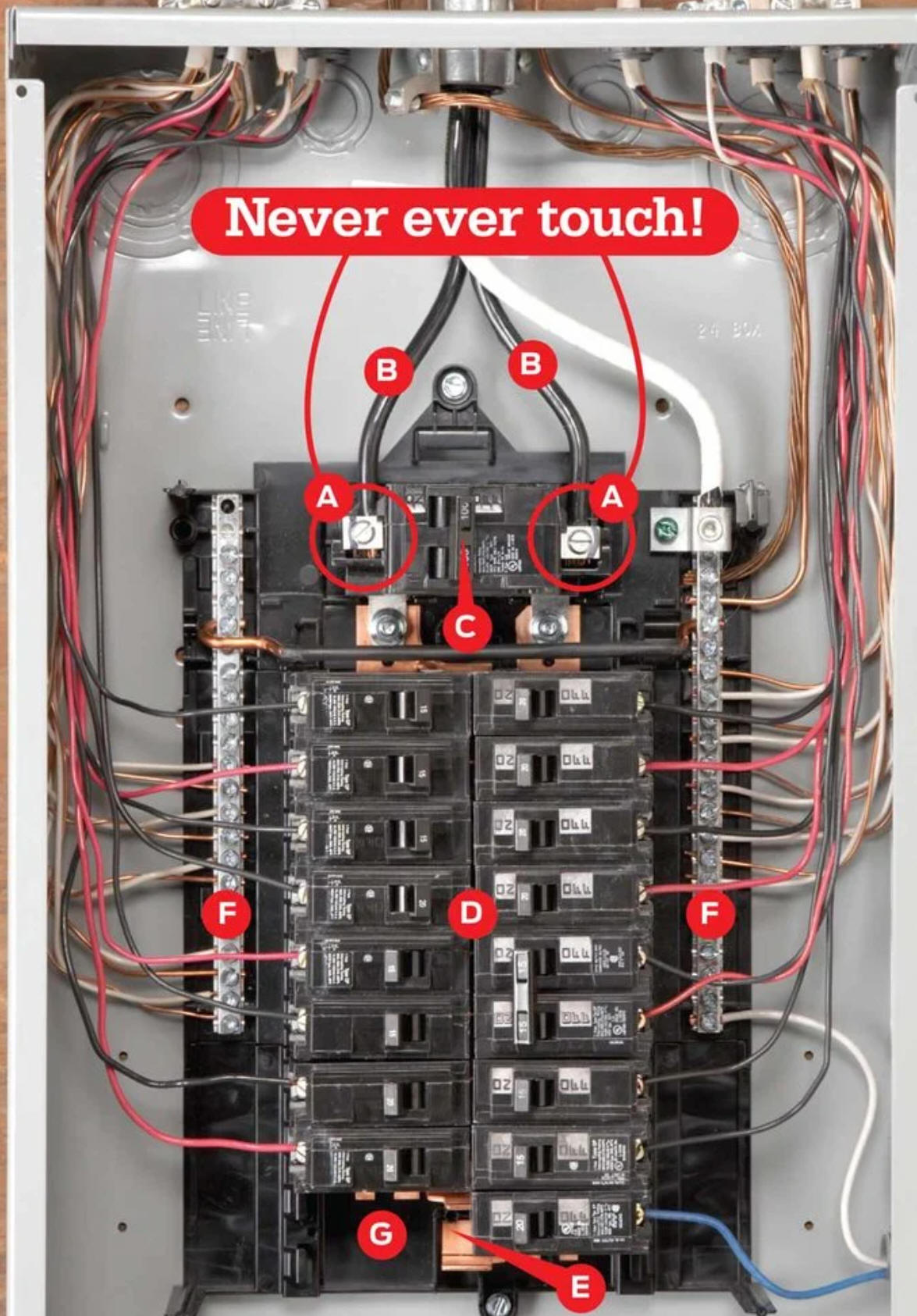
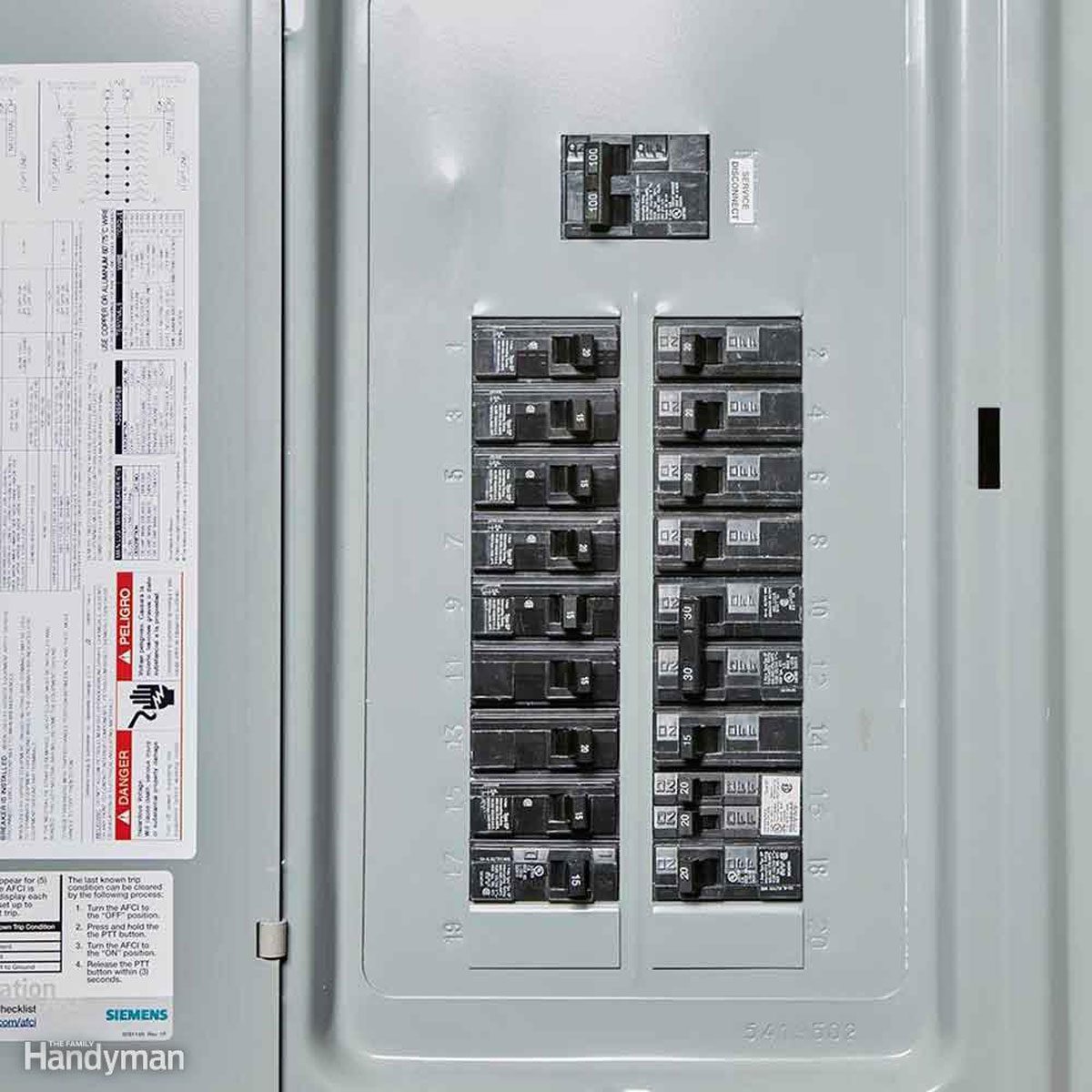
The pictures on the right show breaker panels.
1. What is the purpose of a breaker?
2. How does an electrician decide how many breakers are needed?
3. Why are there different kinds of breakers?
Today:
- Test
- Video? Episode 2: Electric Circuits
- Continue Circuit Notes and pHet activity PDF Version Filled-in Notes Video from 2023 class
- Current and Circuits, part 2 (PDF) VIDEO1 VIDEO 2
Until Next Class: None
 Class
7:
Friday, 2/6/26
Class
7:
Friday, 2/6/26Warm Up:
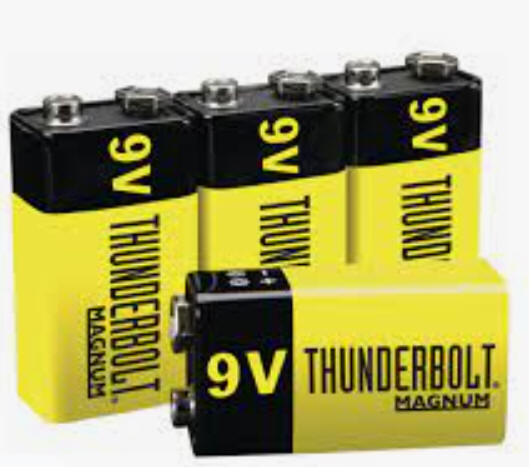
How can you start a fire with a 9 Volt Battery and some steel?
Today:
- Return Quizzes
- Test review
- Continue Circuit Notes and pHet activity PDF Version Filled-in Notes Video from 2023 class
- Current and Circuits, part 2 (PDF) VIDEO1 VIDEO 2
Until Next Class: Test over the material on the 3 quizzes. If you want, you can drop the three quiz scores.
 Class
6:
Wednesday, 2/4/26
Class
6:
Wednesday, 2/4/26Warm Up:
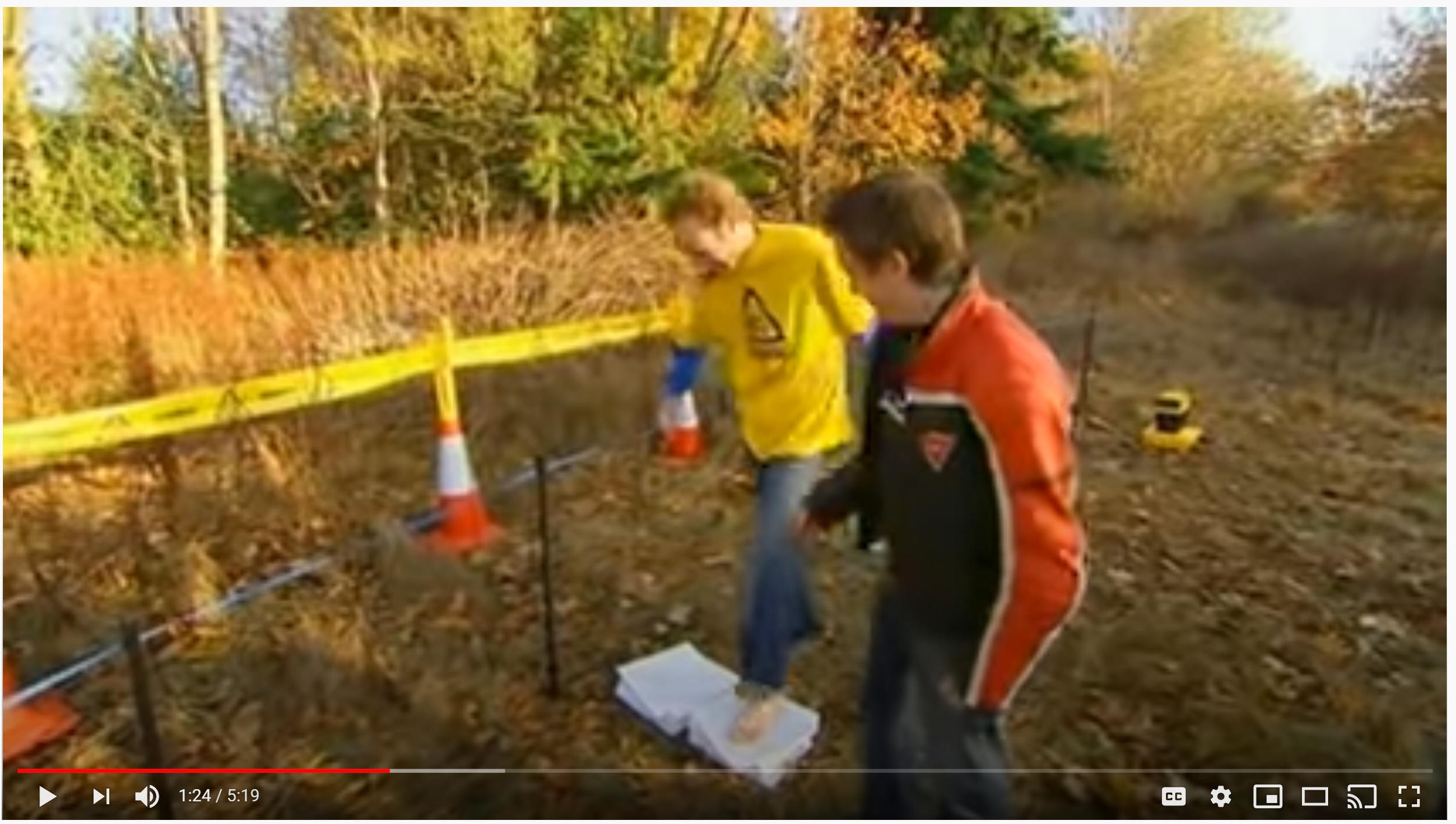
How does an electric fence work?
Today:
- Return Quizzes
- Quiz -- Electric field
- Test review?
- The new thing -- electric current and circuits
- Circuit Notes and pHet activity PDF Version Filled-in Notes Video from 2023 class
Until Next Class: Test next Tuesday over the material on the 3 quizzes. If you want, you can replace the three quiz scores with your test score.
 Class
5:
Monday, 2/2/26
Class
5:
Monday, 2/2/26Warm Up:
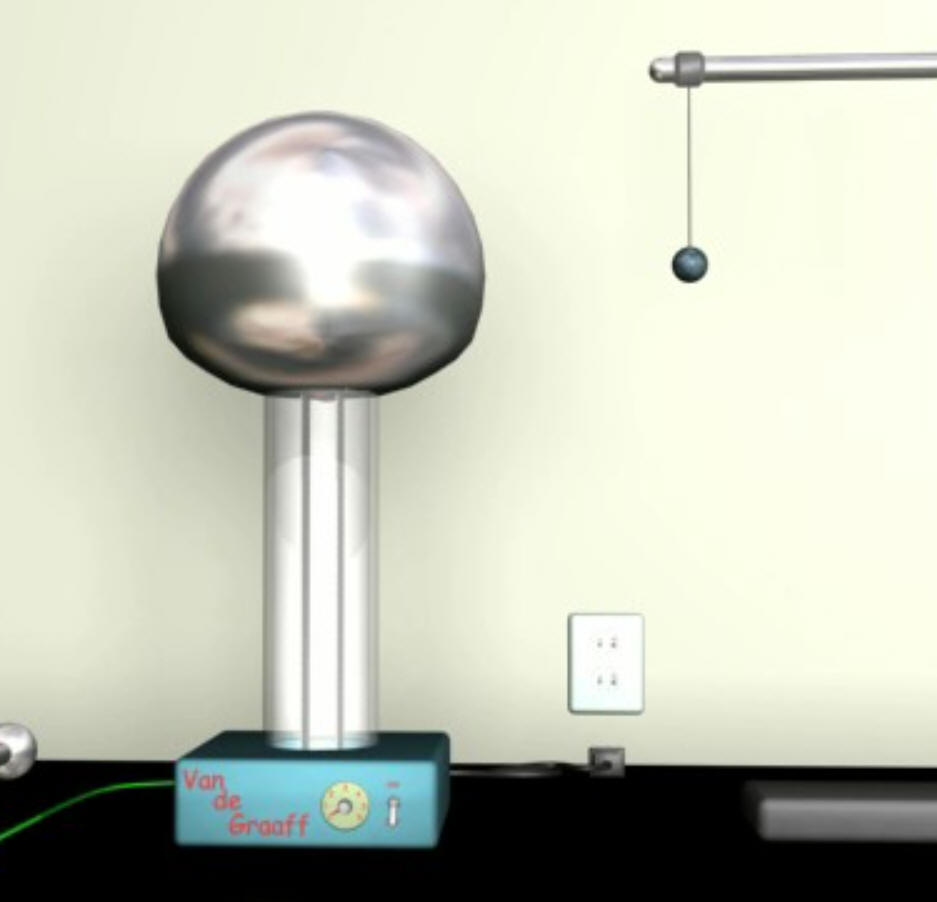
There is a "pith ball" hanging next to the Van de Graaff generator. The pith ball is foam that is covered with a conductive, metallic paint. What do you think will happen when the Van de Graaff generator builds up a strong negative charge? Why?
Today:
- Quiz -- Conductors and Insulators
- Notes: Electric Charge. Video in the playlist.
- Practice Questions on p. 13-14
- Unit 5 Handout: Electric Charge (PDF)
Until Next Class: Last quiz of the unit -- like p. 13-14 in the handout
 Class
4:
Thursday, 1/29/26
Class
4:
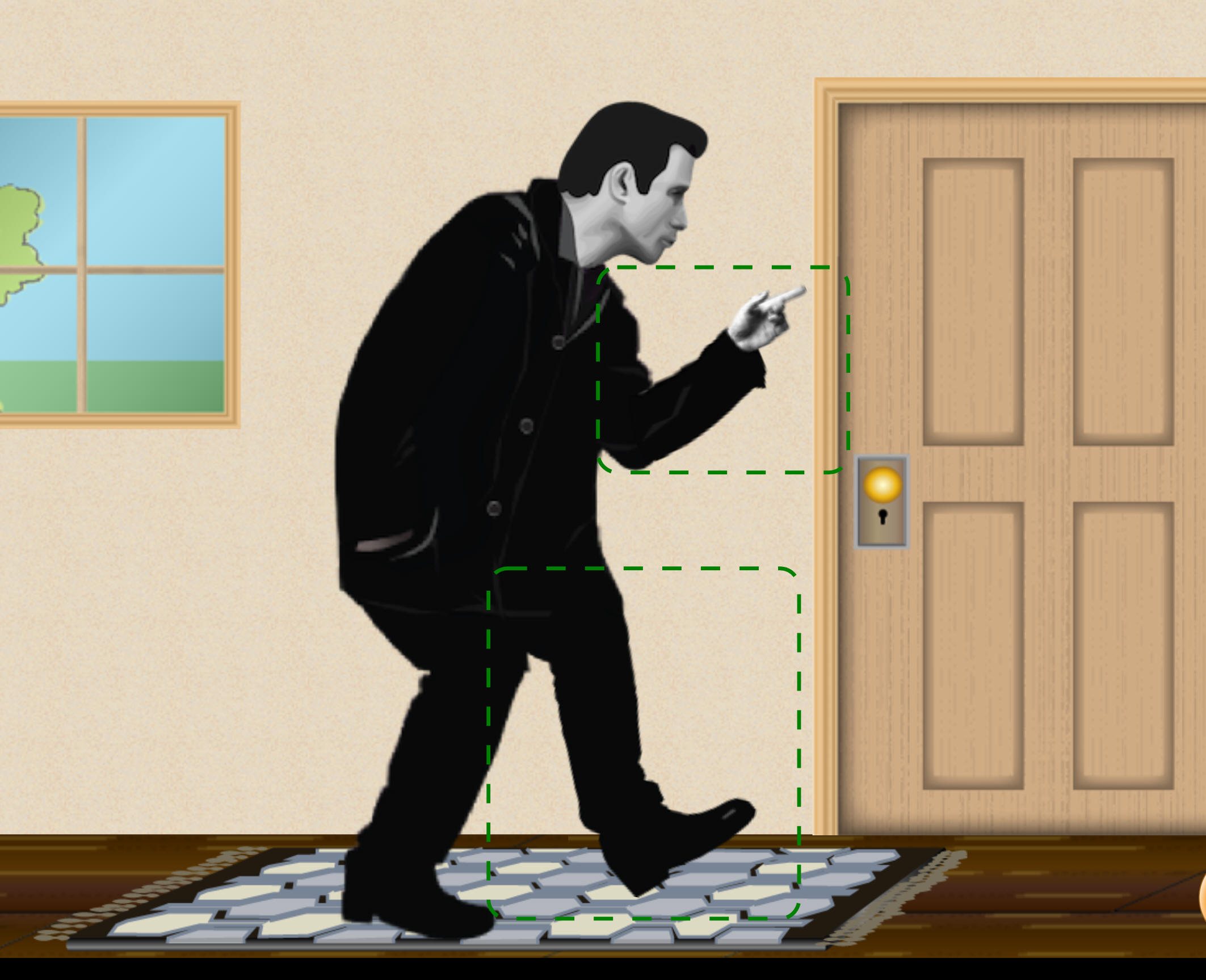
Thursday, 1/29/26Warm Up:
What do you think will happen if we make John Travoltage rub his foot on the floor and then hold his hand by the doorknob? Why?Today:
- Return Quizzes
- Finish Notes: Conductors and Insulators. Everybody tries the electrophorus. Does the electrophorus have to be touching the foam in order to work? Video is int he playlist.
- Shock yourself, repeatedly, with the electrophorus. Explain what's happening to the charges and what the net charge of the plate is.
- Practice Questions : p.11-12
- Learn about Electric Fields
- Unit 5 Handout: Electric Charge (PDF)
Until Next Class: Quiz next class, like pages 11-12
 Class
3:
Tuesday, 1/27/26
Class
3:
Tuesday, 1/27/26Warm Up:
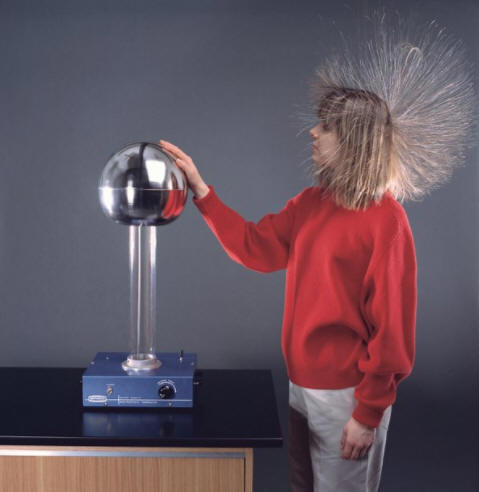
How does a Van de Graaff Generator Work?Today:
- Quiz 1: Electric Charges
- Notes: Conductors and Insulators
- Unit 5 Handout: Electric Charge (PDF)
Until Next Class: None
 Class
2:
Friday, 1/23/26
Class
2:
Friday, 1/23/26Warm Up:
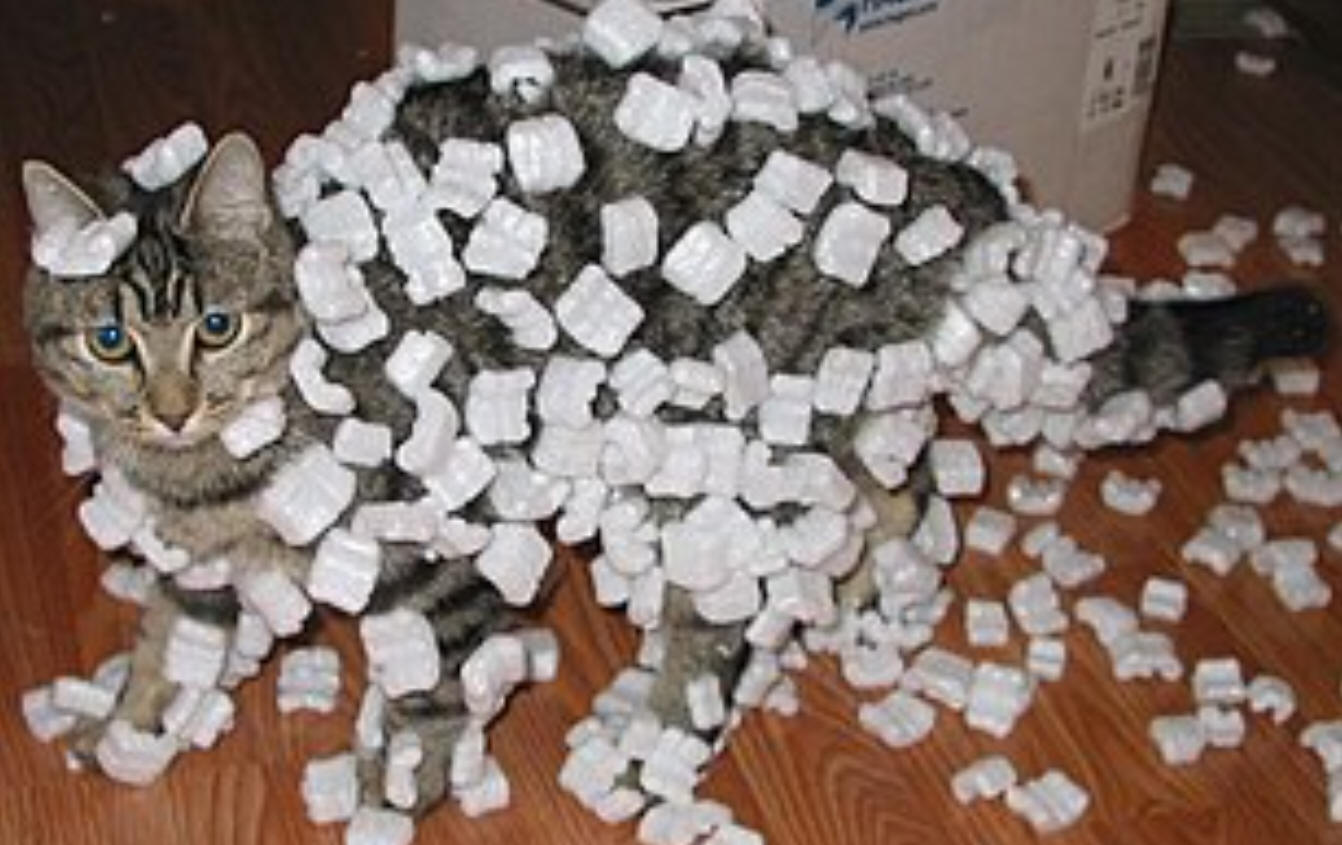
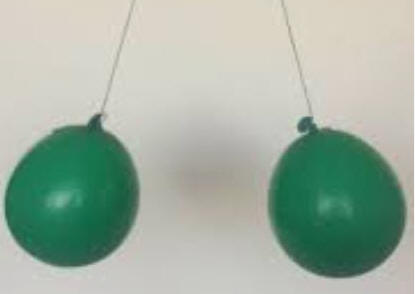
Which of the following can we say with certainty? Why?
A) The balloons have the same net charge
B) The cat and the foam "peanuts" have opposite net charges.
C) Both A and B are correct.
D) None of these answers is (are) correct.
Today:
- Finish Clear Tape Activity
- Complete Review on P. 9-10
- Unit 5 Handout: Electric Charge (PDF)
Until Next Class: Quiz -- like p.9-10 of handout
 Class
1:
Wednesday, 1/21/26
Class
1:
Wednesday, 1/21/26Warm Up:
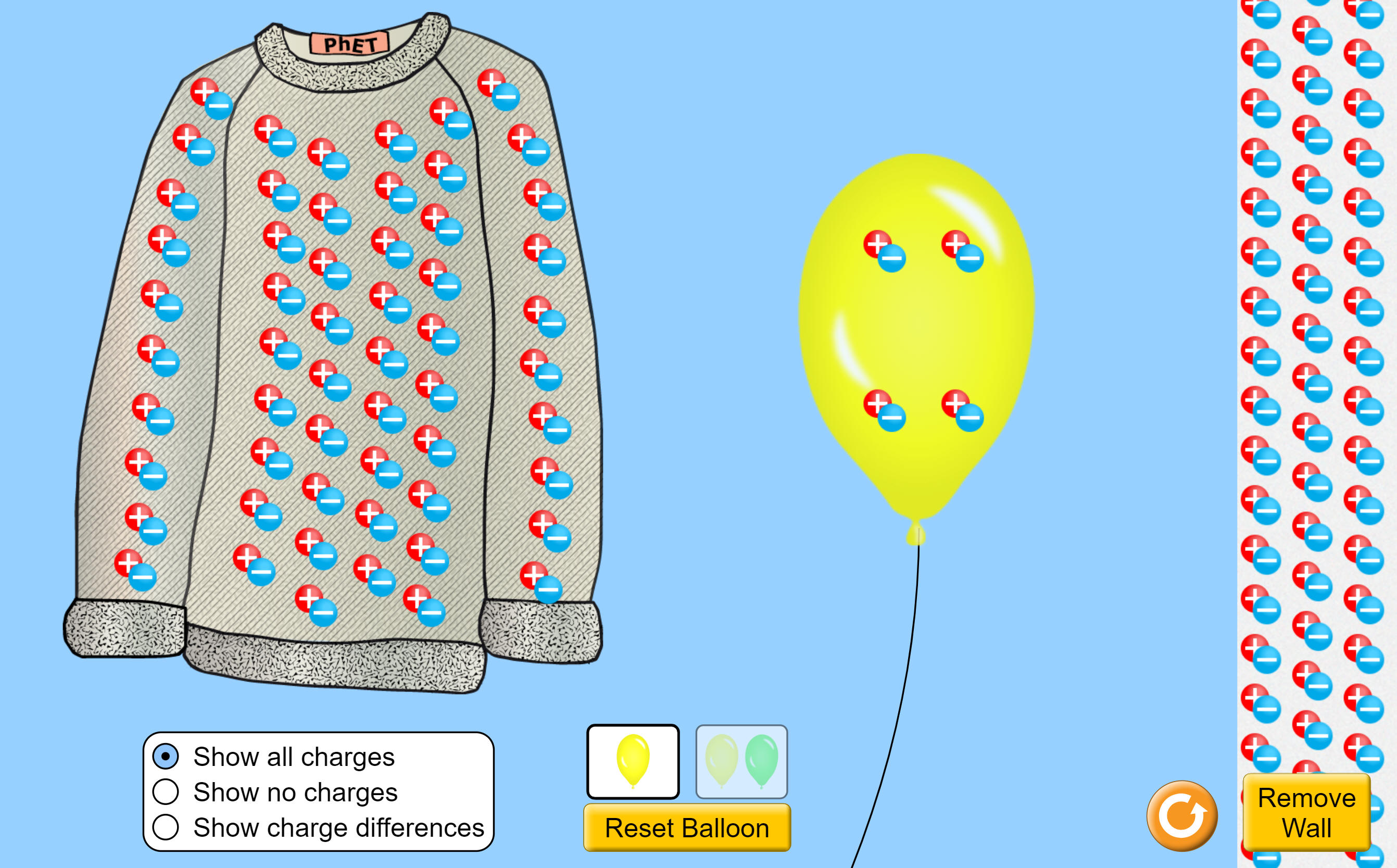
When you rub a balloon on your hair, why does the balloon then stick to the wall?
Today:
- Look at midterm exams.
- New Unit -- Electric Charges
- Take notes (see video on class playlist)
- Start Clear Tape Activity
- Unit 5 Handout: Electric Charge (PDF)
Until Next Class: Quiz